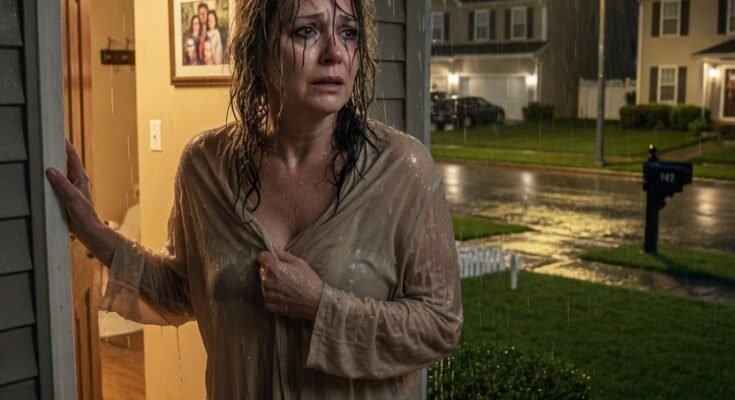
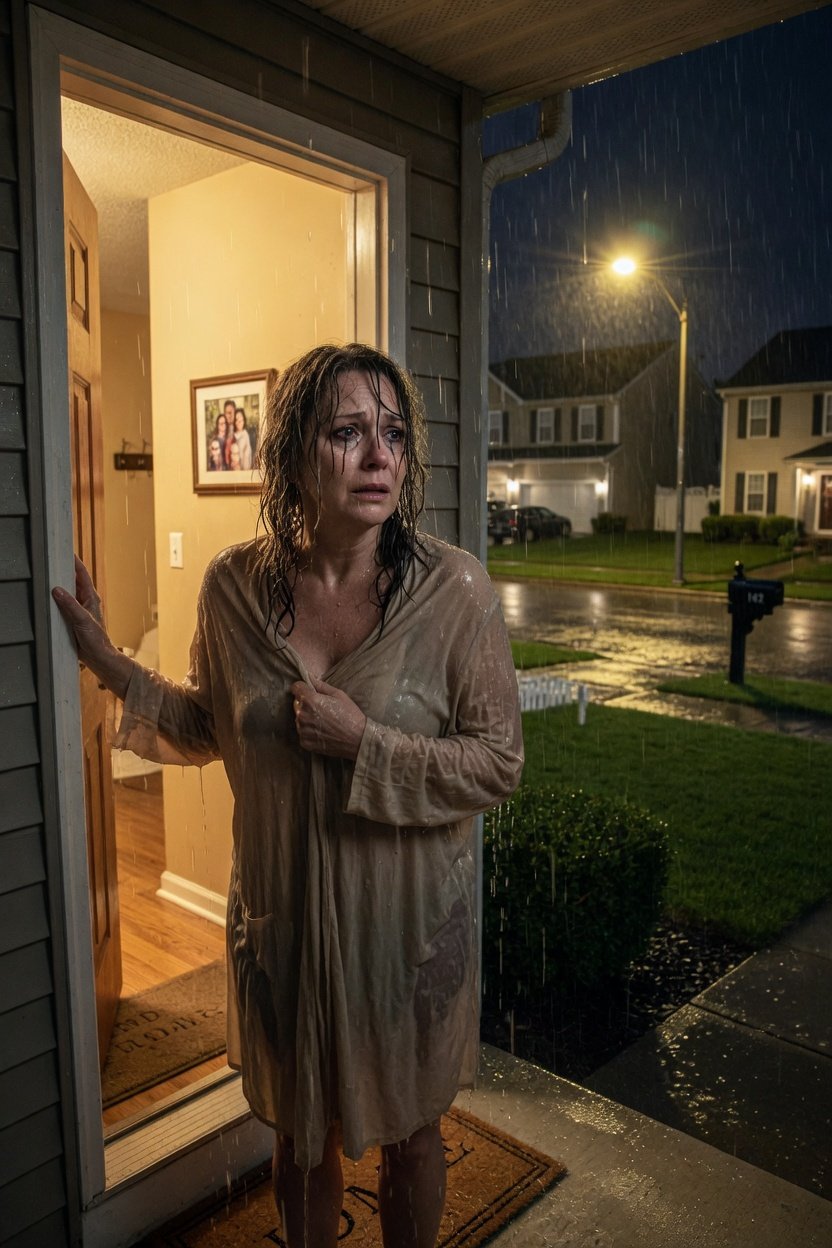
I stood there for what felt like an eternity, the cold wind blowing past her into my warm hallway. Part of me wanted to laugh. I wanted to tell her that maybe she could find some sustenance in the “unauthorized” vegetable garden she had forced me to dig up six months ago. I wanted to remind her of the $500 fine I had to pay because of her “concern” over my roof shingles. But as I looked into her eyes, I didn’t see the HOA Queen. I saw a woman who was absolutely terrified.
“Come in, Evelyn,” I said, stepping aside.
She hesitated on the welcome mat, looking down at her dripping clothes. “I’ll ruin your hardwood,” she murmured, the irony of her concern for my property values not lost on either of us.
“It’s just wood, Evelyn. Get inside.”
I wrapped her in a thick blanket and went to the kitchen. As I heated up some homemade beef stew, the story poured out of her in jagged, sobbing pieces. Greg wasn’t the quiet, henpecked husband the neighborhood thought he was. He was a financial tyrant. Every dollar was accounted for; every meal was planned by him. The perfection of their home wasn’t her obsession—it was his requirement.
“The reports,” she choked out, clutching a mug of tea I’d pressed into her hands. “The thirty-seven reports. He made me write them. He said if we didn’t keep the neighborhood ‘perfect,’ the property value would dip, and he’d lose money on the eventual sale. He dictated the letters. He made me watch you from the porch. He told me if I didn’t do it, he’d cut off the grocery allowance.”
I sat across from her, stunned. The woman I had spent two years hating was a prisoner in a golden cage, forced to be the warden of a prison she didn’t want to run. She told me that Greg had been planning his exit for months. He had drained their joint accounts, signed over the house to a holding company I couldn’t even pronounce, and left her with exactly twelve dollars in her purse and a refrigerator that he had emptied before he walked out.
“I tried to tell you,” she sobbed. “That day with the trash cans… I tried to look sorry, but he was watching from the window. He liked the power. He liked watching me make enemies.”
As she ate the stew, she looked less like a villain and more like a victim of a very long, very quiet war. I realized then that my anger had been directed at a mask. We sat in silence for a long time after she finished. The rain continued to lash against the windows, but the tension that had existed between our houses for two years had evaporated.
“What are you going to do?” I asked.
“I don’t know,” she admitted. “He took the car. I don’t even know how to pay the electric bill.”
“Well,” I said, standing up and heading back to that kitchen drawer. I pulled out the folder of thirty-seven citations. She flinched when she saw them. I walked over to the fireplace, tossed the entire folder onto the embers, and watched the paper curl into black ash. “First, we’re going to stop worrying about the rules. Tomorrow, we’re going to call a lawyer. And tonight, you’re sleeping in my guest room.”
Over the next few months, the neighborhood changed. The grass grew a little taller. A few more “unauthorized” lights appeared on porches. Evelyn didn’t leave; she fought back. With the help of a few other neighbors I introduced her to, she managed to secure a portion of the house in the divorce settlement.
She’s still on the HOA board, but things are different now. She doesn’t carry a clipboard. Instead, she carries a basket of muffins for new neighbors. And on my porch, I now have the largest, most “non-regulation” collection of potted plants Willow Creek has ever seen. Sometimes, Evelyn even comes over to help me water them, and we laugh about the time she almost had me evicted for the color of my curtains. The thirty-eighth interaction we had wasn’t a report; it was a rescue. And in the end, it was the only one that actually mattered.
Watch movie:

*Content is hosted on a partner site.
