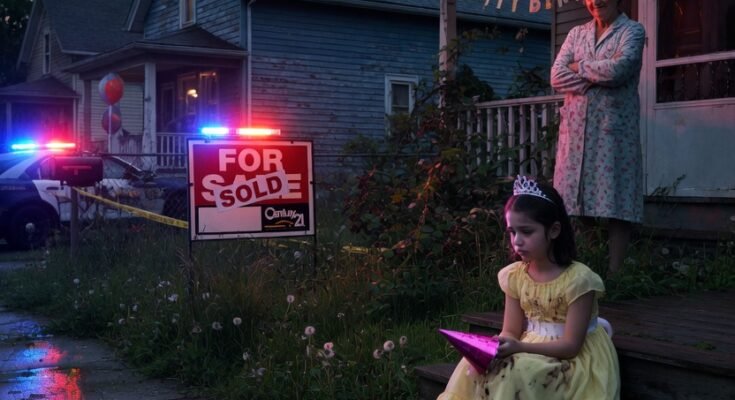
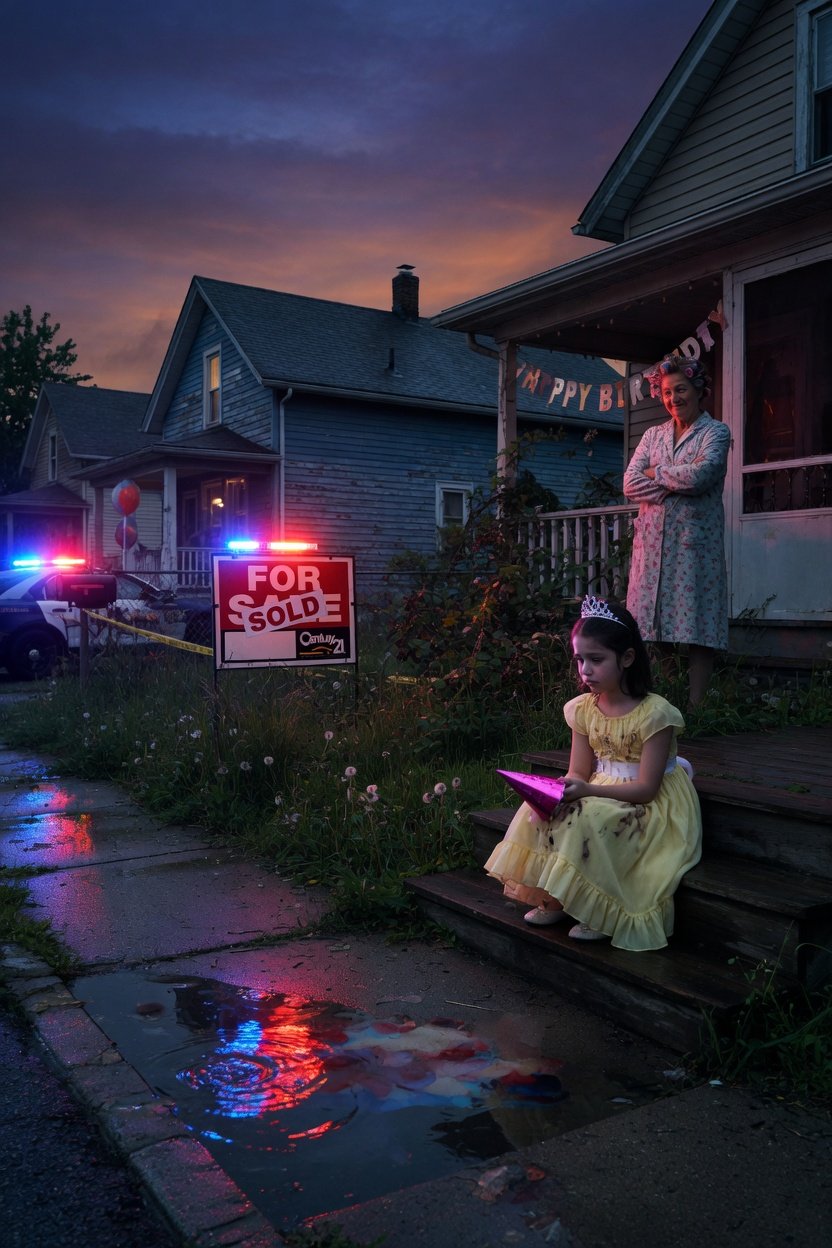
I didn’t waste a single second. By Monday morning, I had my real estate attorney contact the executors of the estate. By Wednesday, I had signed the papers. I didn’t just buy the lot; I bought it through a newly formed LLC so the Millers wouldn’t see my name on the initial public filings.
For the first few weeks, the Millers were ecstatic. I watched from my kitchen window as Mrs. Miller walked onto the lot with a tape measure, clearly dreaming of how she would influence whoever bought it. She even had the audacity to knock on my door to brag.
“Did you see the ‘Sold’ sign?” she asked, her voice dripping with artificial sweetness. “Finally, some dignity will be restored to this street. I hear a developer bought it. Hopefully, they’ll put up a high wall to block out the… noise.”
“I heard the same thing, Gertrude,” I replied with a thin smile. “I think you’re going to be very surprised by what goes up there.”
The “surprise” began two weeks later. I didn’t build a house. I didn’t build a garden. I applied for—and was granted—a permit for a “Non-Profit Animal Rescue and Community Youth Activity Center.” Because the lot was zoned for “Agricultural/Semi-Commercial” use, and I was technically opening a non-profit, the HOA had almost zero power to stop me.
First came the fence. Not a pretty white picket fence, but a heavy-duty, industrial-grade chain link fence that ran exactly one inch inside my property line, right up against their manicured hedge. Then came the “residents.”
I partnered with a local beagle rescue. Beagles are wonderful dogs, but they are famous for one thing: baying. Loudly. I funded the construction of a state-of-the-art outdoor run that was positioned, by sheer “coincidence,” directly beneath the Millers’ master bedroom window. Within a month, we had twelve rescue beagles who found great joy in howling at the moon, the sun, and particularly at Mrs. Miller whenever she stepped onto her porch.
But I wasn’t done. The second half of the lot became the “Lily Pad.” It was a free, private playground I opened to the entire neighborhood—except the Millers. I installed a professional-grade basketball court, a skate ramp, and a massive jungle gym.
The silence the Millers had fought so hard to protect was replaced by the beautiful, chaotic symphony of barking dogs and cheering children. Every Saturday, we held “Community Cupcake Days.” The music was always Disney, and the volume was always exactly one decibel below the legal limit.
The Millers tried everything. They called the police every single day for a month. But unlike the day of Lily’s birthday, I had everything documented. The police grew tired of their “nuisance calls” and eventually issued Mrs. Miller a citation for abusing the 911 system. They tried to sue for “loss of property value,” but my legal team pointed out that a community center and a licensed rescue actually stabilized the area’s growth.
Six months later, a “For Sale” sign appeared in the Millers’ yard. The problem was, nobody wanted to buy a house located between a “bark park” and a skate ramp. They had to drop their asking price three times.
Eventually, they sold to a lovely young couple with four boys and three golden retrievers. On the day the Millers packed their U-Haul, I stood on my porch, holding a cupcake and a glass of lemonade. Lily was in the yard, playing tag with her new friends from the neighborhood.
As Gertrude Miller glared at me one last time, her face purple with rage, I simply waved. “Have a quiet move, Gertrude! Watch out for the noise ordinance on your way out!”
She didn’t say a word. She just got into her car and drove away, leaving behind the lot she once coveted—now a permanent monument to the fact that if you mess with a child’s birthday, their parent might just buy the ground you stand on to teach you a lesson.
Watch movie:

*Content is hosted on a partner site.
