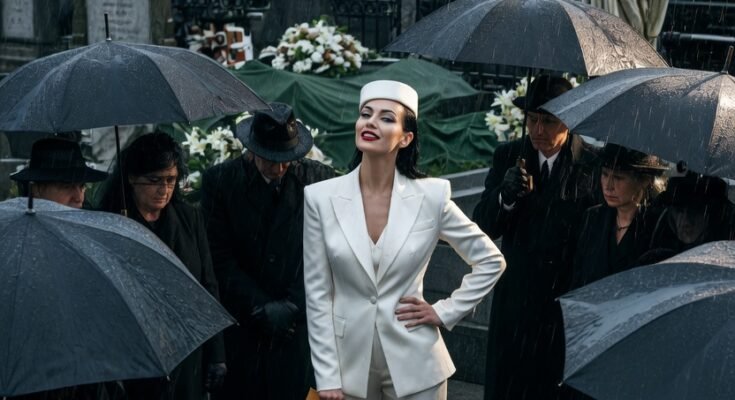
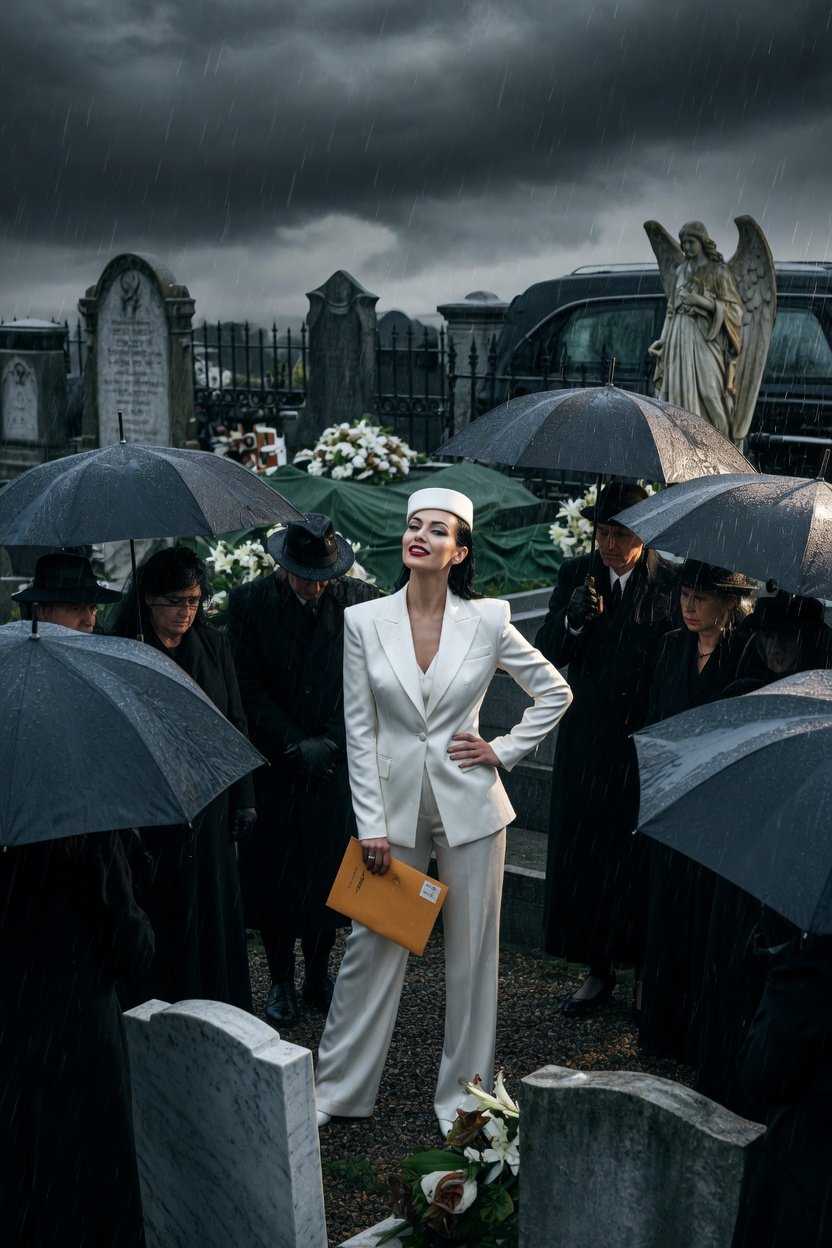
For the first twenty-four hours, I sat in my father’s study—the room that was no longer mine—surrounded by boxes I refused to fill. Cassandra was already upstairs, humming to herself as she tossed my mother’s vintage vases into trash bags. The audacity of her “victory” was suffocating, but it was also her greatest weakness. She thought I was a broken girl. She forgot I was my father’s daughter.
My father was a paranoid man. He had spent his career in high-stakes corporate security, and he never did anything without a backup plan. As I stared at the heavy mahogany desk, I remembered something he told me when I was twelve: “Elena, the most important secrets aren’t kept in safes; they are kept in plain sight.”
I began to examine the floorboards, the bookshelves, and finally, the antique grandfather clock that stood in the corner. I noticed a small, nearly invisible scratch on the side of the clock’s housing. I pushed a hidden latch, and a small compartment popped open. Inside was a tiny USB drive and a handwritten note: *For Elena. In case the white lily turns out to be a weed.*
I plugged the drive into my laptop. My heart hammered against my ribs as a video file opened. The timestamp was from the night the deed was signed. The video showed my father’s bedroom. Cassandra was there, leaning over his bed. He looked frail, his eyes glazed over from the heavy sedatives she had been “administering” under the guise of care.
“Sign it, Thomas,” she hissed in the video, her voice a sharp contrast to the sweet tone she used in public. “Sign it, and I’ll give you the medicine that makes the pain stop.”
“It’s… for Elena?” my father whispered, his hand shaking.
“Yes, of course,” she lied, guided his hand to the paper, and forced the signature.
But that wasn’t the only thing on the drive. There was a second folder labeled “The New York Files.” As I clicked through the documents, I felt a surge of cold triumph. It turned out Cassandra wasn’t just a gold-digger; she was a professional. My father had hired a private investigator months ago when he first started feeling ill. The files revealed that “Cassandra” didn’t exist. Her real name was Monica Vance, and she was still legally married to a man in Nevada. Her marriage to my father was bigamous—and therefore, completely null and void.
I didn’t call the police immediately. I waited until the forty-eighth hour.
Cassandra descended the stairs in another white outfit, looking ready to host a gala. She found me sitting in the foyer, my suitcases packed, but I wasn’t moving toward the door. Two men in dark suits stood behind me—the estate’s long-time attorney and a detective from the fraud unit.
“Elena, I told you the time was up,” she said, her voice dripping with mock pity. “Don’t make this difficult.”
“I agree, Monica,” I said, using her real name.
The color drained from her face so fast I thought she might faint. “What did you call me?”
“I’ve spent the last two days learning all about you,” I said, standing up and handing the detective the USB drive. “About the bigamy, the forced signature under sedation, and the little ‘cocktail’ of drugs you were feeding my father. The deed is worthless. Your marriage is a fiction. And this house? It’s exactly where you’re going to be arrested.”
The detective stepped forward, and the sound of handcuffs clicking echoed through the marble foyer—the most beautiful sound I had ever heard. Cassandra began to scream, her poised facade shattering into a jagged mess of curses and threats.
As they led her out, her pristine white suit caught on the doorframe, tearing a long, ugly gash in the silk. I stood on the porch, watching the police car pull away. The rain had finally stopped, and for the first time since my father’s death, the sun broke through the clouds. I walked back inside, locked the door, and began the long process of cleaning the house of every trace of her, starting with the trash bags she had intended for my memories.
Watch movie:

*Content is hosted on a partner site.
