
In an era when paranoia became an art form and every whispered phone call could mean life or death, few actors embodied cool intelligence under pressure like Robert Redford. Three Days of the Condor, directed by Sydney Pollack, isn’t just a political thriller — it’s a time capsule of tension, elegance, and the electric presence of a star at the height of his power.

From the moment Redford steps on screen as Joe Turner, a mild-mannered CIA researcher who accidentally uncovers a secret he was never meant to see, he commands attention with effortless magnetism. His Condor isn’t a James Bond imitation or a comic-book hero — he’s everyman sharpened by instinct, intellect, and fear. Redford makes paranoia look poetic, his charm turning survival into something strangely seductive.
The beauty of Redford’s performance lies in its restraint. His face — all sharp cheekbones, restless eyes, and quiet defiance — becomes the film’s moral compass. You believe every flicker of thought, every dart of suspicion. When he realizes his colleagues have been killed, the panic is palpable but never theatrical. Redford’s Condor doesn’t shout; he thinks, and that’s what makes him dangerous.

Opposite him, Faye Dunaway brings haunting softness to Kathy Hale, the woman unwillingly drawn into Condor’s web of deception. Their scenes crackle with understated tension — intimacy born from distrust. The romance, fleeting yet fragile, plays like a moment of warmth stolen from an ice-cold world.
Sydney Pollack’s direction is masterful — all shadowed rooms, sterile offices, and silent guns. He films New York like a maze of glass and steel where truth is reflected but never revealed. Every frame feels like it’s watching you back. The film’s pace — deliberate but relentless — mirrors Condor’s unraveling sanity. Each phone call, each betrayal, tightens the noose.
And then there’s the mood. The score by Dave Grusin drips with 70s jazz and urban melancholy, a sonic echo of isolation and danger. The editing keeps viewers perpetually off balance, as if the film itself doesn’t know who to trust.
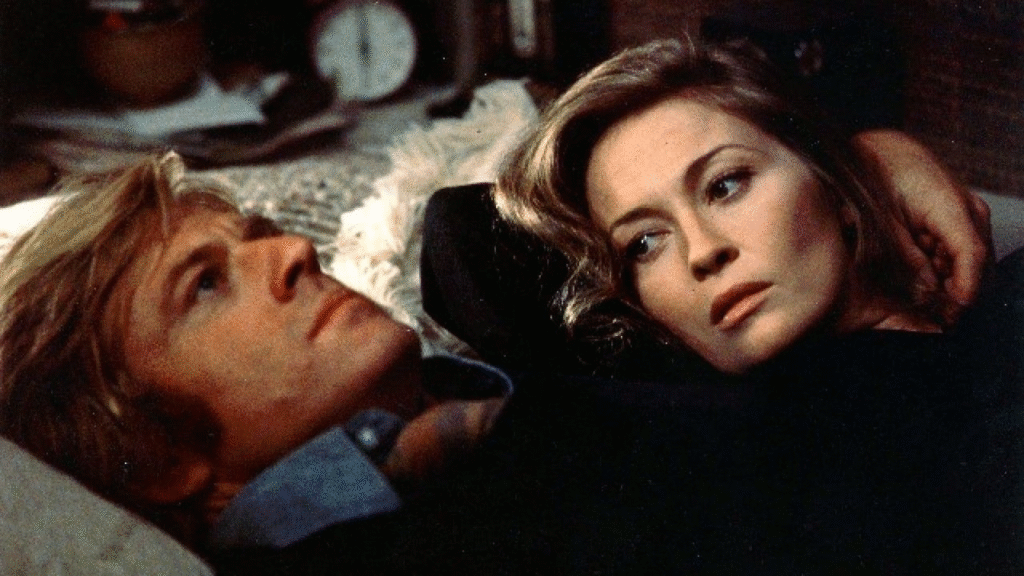
Yet, it’s Redford’s aura that transforms Three Days of the Condor from thriller to cinematic myth. In his prime, Redford had the rare ability to blend intellectual gravitas with movie-star allure — a combination that made him both believable and untouchable. Watching him navigate a world collapsing under lies and greed feels eerily prophetic today.
The film’s closing scene, in which Condor confronts the very institution that betrayed him, still resonates like a warning. His voice is steady, his gaze unflinching — the embodiment of integrity in a world that’s sold its soul. When asked if he’s sure his truth will be published, he hesitates, and that hesitation says everything.
Almost fifty years later, Three Days of the Condor remains the gold standard of espionage thrillers — intelligent, sexy, and politically charged. And Robert Redford? He remains the standard of charisma — a man who could make fear look graceful and rebellion look good.
💬 Verdict:
⭐ 9.5/10 — Sleek, cerebral, and intoxicatingly cool. “Three Days of the Condor” is Robert Redford’s defining hour — proof that in the 70s, nobody did mystery, morality, or magnetism like him. 🕶️🔥
Watch movie:

*Content is hosted on a partner site.
