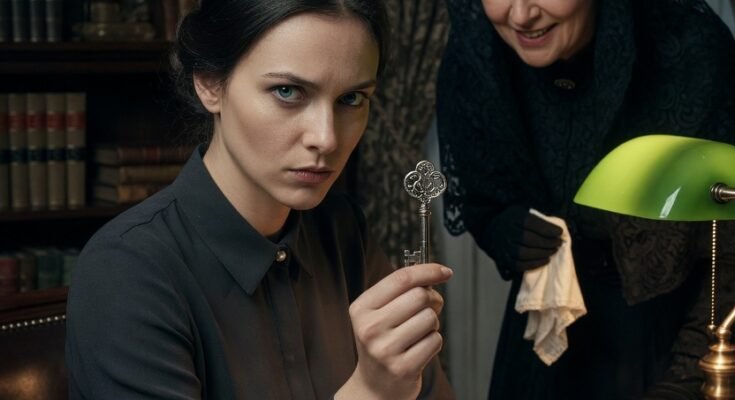
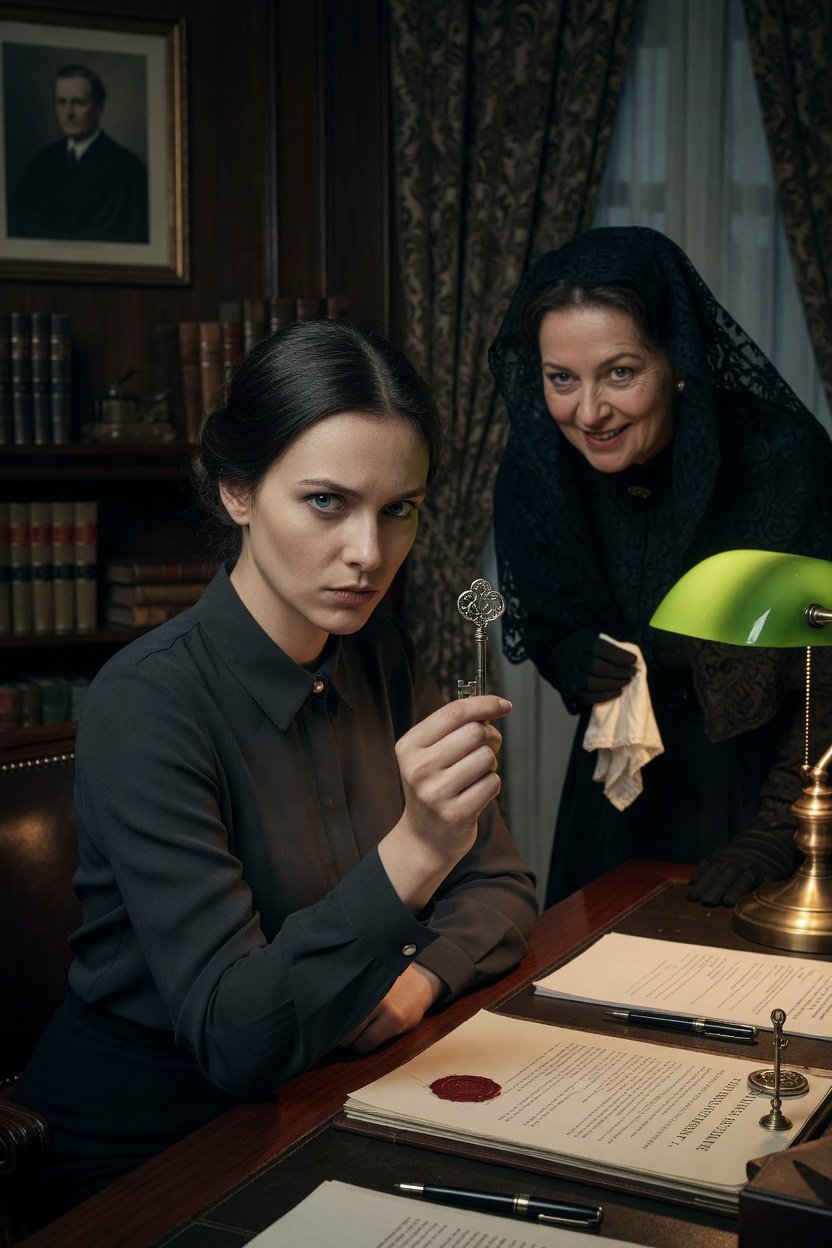
The lawyer, Mr. Henderson, stared at the silver key. Elena let out a sharp, mocking laugh. “Lydia, dear, we asked for the will, not a souvenir from a flea market. Stop playing games so we can get this over with.”
I didn’t look at her. I looked directly at the lawyer. “My grandmother knew that certain people in this family had ‘sticky fingers,’ Mr. Henderson. She anticipated that her personal effects would be looted before the legal process even began. That key opens a private safety deposit box at the Central Bank—a box that was updated exactly forty-eight hours before her passing.”
My father scowled. “What are you talking about? All her assets are listed in the primary estate file. There are no other boxes.”
“Actually, Mr. Davis,” the lawyer interrupted, his tone suddenly very professional and very grim. “Your mother contacted my firm last week to add a Codicil—a formal amendment—to her will. She specifically mentioned the potential ‘misappropriation’ of her jewelry and household items. She was very clear: the will we are about to read is conditional.”
Elena’s face went pale. The smugness evaporated, replaced by a twitch at the corner of her mouth. “Conditional? On what?”
“On the integrity of the heirs,” I said, leaning back.
We drove to the bank in a tense, suffocating silence. Elena spent the entire ride whispering to my father, likely trying to come up with a lie to explain away the missing jewelry. When we reached the private vault, the bank manager led us into a small, sterile room. I inserted the silver key and turned it. The heavy metal door swung open to reveal… nothing.
The box was empty, except for a single, handwritten note and a flash drive.
Mr. Henderson cleared his throat and read the note aloud: *”To my son, David, and his ‘enterprising’ wife, Elena. If you are reading this in this room, it means you have already looked for my jewelry in my home and found it missing. You likely thought you were very clever, selling off pieces of my life to fund your own. However, I never kept the real sapphires in the house. The pieces you sold were high-quality lead glass replicas I had commissioned years ago for travel safety. The real collection was moved to a trust in Lydia’s name months ago.”*
The silence in the room was deafening. My father’s jaw dropped. Elena looked like she was about to vomit. “She… she lied?” Elena gasped. “That jeweler… he’s going to sue us for fraud! We took ten thousand dollars for those!”
“It gets worse for you,” I said, pointing to the flash drive.
The lawyer plugged the drive into his laptop. A video appeared on the screen—it was Grandmother Evelyn, sitting in her favorite armchair, looking frail but incredibly sharp-eyed.
“David,” the video version of Grandmother said, her voice steady and stern. “I watched you allow that woman to strip my home while I was still breathing. I saw her eyeing my rings while she thought I was asleep. Because you failed to protect your mother’s legacy, and because you joined her in her greed, I have exercised the ‘Family Preservation’ clause in my estate. Any heir found to have sold, pawned, or disposed of any estate property—real or replica—prior to the final probate will be immediately and irrevocably disinherited for ‘moral turpitude.'”
Grandmother leaned closer to the camera. “Elena, you sold glass. But in the eyes of the law, you stole from the estate. David, you stood by and let it happen. Therefore, the house, the accounts, and every genuine piece of jewelry I own now belong solely to my granddaughter, Lydia. You have thirty days to vacate my property. I suggest you use that ‘cruise’ money to find a rental.”
The video ended. Elena turned on my father, screaming that he told her the jewels were real, that it was his fault they were now penniless. My father looked at me, his eyes pleading. “Lydia, honey, you can’t do this. I’m your father. She’s your family.”
“You told me not to be materialistic, Dad,” I said, standing up and taking the silver key back from the table. “You said Grandmother’s spirit wasn’t in those things. So, you shouldn’t mind that you don’t own them anymore. I’m just ‘being proactive,’ like Elena said.”
I walked out of the bank and headed straight to the pawn shop. I bought back the glass replicas with my own savings—not because they were valuable, but because they were the bait that finally showed my father exactly who he had married. I kept them on the mantel of my new house, a sparkling reminder that greed always eventually trips over its own feet.
Watch movie:

*Content is hosted on a partner site.
