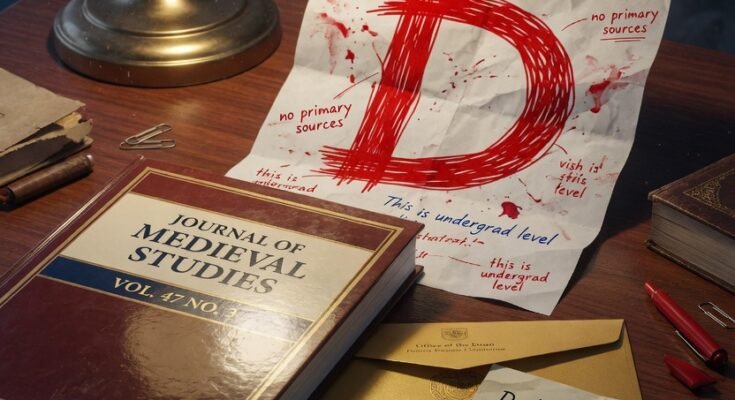
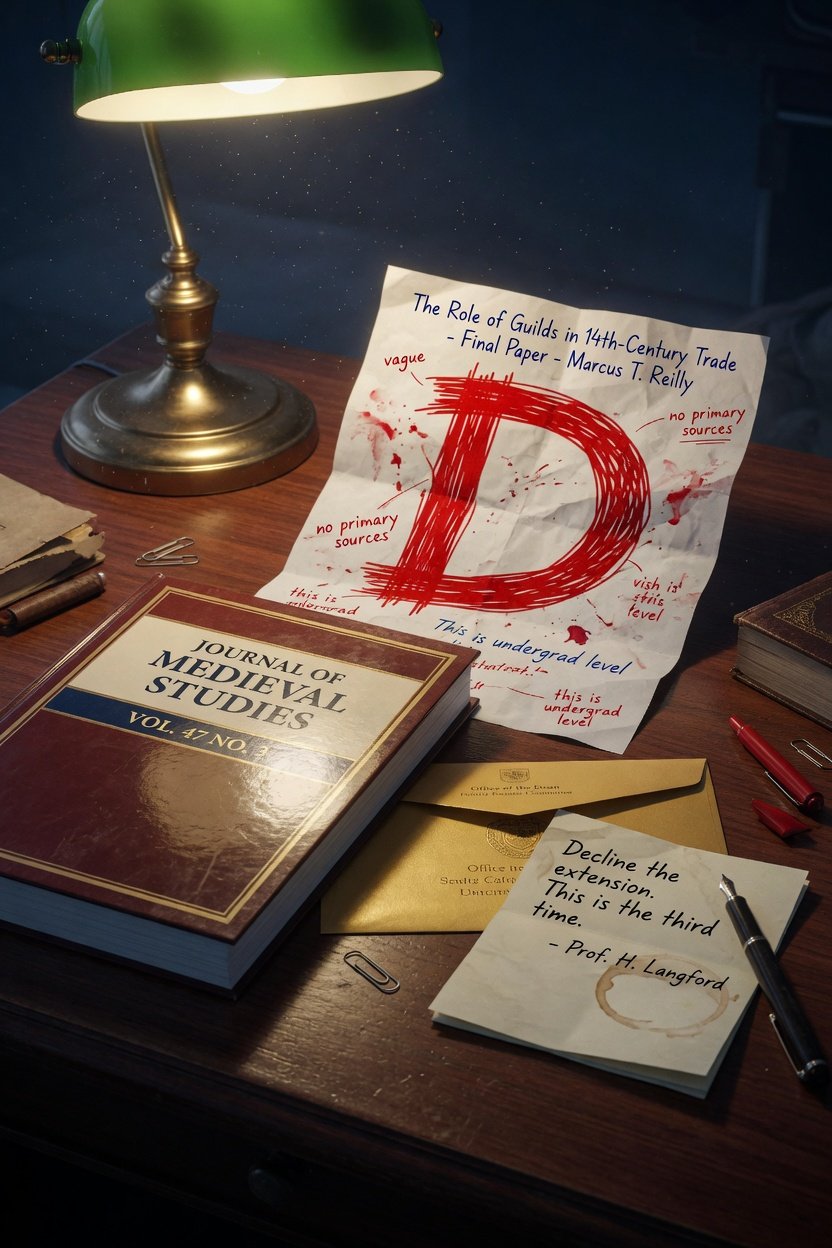
The walk to Professor Sterling’s office felt different this time. The last time I stood before his mahogany door, I was a trembling student seeking validation. Today, I was a published author with the weight of the national academic community behind me. I didn’t knock. I simply slid the gold envelope through his mail slot and walked away, a quiet smile playing on my lips.
Inside the envelope, the note I had written was brief: *”To Professor Sterling: It appears the ‘amateurish’ imagination you dismissed has found a home in the National Journal of Economic Theory. Perhaps the ‘economic reality’ you teach is becoming as outdated as your grading rubrics. I’ve enclosed a copy for your library—I noticed your own name hasn’t appeared in these pages for quite a few years. Best regards, Alex.”*
I didn’t expect to hear back. I assumed he would shred the journal and bury the embarrassment in the bottom drawer of his desk. But academia is a small world, and gossip travels faster than a market crash. By the following afternoon, the news had hit the department. The Dean of the Economics Department, Dr. Aris, had seen the journal. More importantly, he had seen that a student from his own university had scooped the entire faculty on a major theoretical breakthrough.
The irony was delicious. The very paper Sterling had slapped with a ‘D’ was now being hailed as a “masterclass in modern analytics.”
On Wednesday, I was summoned to Dr. Aris’s office. When I walked in, I saw Professor Sterling sitting in one of the leather chairs. He looked as though he had aged ten years overnight. His usual posture of arrogant confidence had collapsed into a slumped, defensive stance. On the mahogany desk between them sat the journal, open to my article, with my gold-inked note tucked into the corner.
“Alex,” Dr. Aris said, his tone a mix of admiration and profound awkwardness. “We’ve been reviewing your recent… achievement. It’s quite extraordinary. The National Journal doesn’t just take anyone.”
“Thank you, Dr. Aris,” I replied, keeping my eyes fixed on Sterling. “I was surprised myself, considering the feedback I received here.”
Dr. Aris cleared his throat and looked at Sterling. “Yes, about that. Professor Sterling has informed me that there may have been a… clerical error in your grading. He claims he might have been reviewing a different draft when he assigned that ‘D.’ He’s prepared to rectify the grade immediately to an ‘A+’ with honors.”
I let the silence hang in the room for a long, uncomfortable minute. I watched Sterling’s jaw tighten. He knew I knew he was lying. He hadn’t made a clerical error; he had made an ego error. He had tried to crush a student he found threatening or simply beneath his notice.
“I appreciate the offer, Dr. Aris,” I said calmly. “But I think I’ll keep the ‘D.’ It serves as a much more interesting story for the press. When the University Alumni Magazine interviewed me this morning about my publication, they asked how my professors helped me achieve this. I told them that Professor Sterling, in particular, provided the most ‘impactful’ motivation of my life.”
Sterling’s face went from pale to a deep, bruised purple. The implication was clear: if the story of the ‘D’ got out, it would make him look like a fool—an out-of-touch academic who couldn’t recognize a breakthrough even when it was handed to him on a silver platter.
In the end, Sterling was “encouraged” to take an early sabbatical. The university couldn’t afford the PR nightmare of having a world-renowned student being suppressed by a bitter faculty member. As for me, I walked across the stage at graduation with the highest honors, not because of the grade change, but because I had learned the most important lesson of all: Never let someone else’s narrow vision define the limits of your potential. I kept the original paper, the one with the bleeding red ‘D,’ and framed it. It hangs in my office today, right next to my first book, a constant reminder that the loudest critics are often the ones who are the most afraid of the future.
Watch movie:

*Content is hosted on a partner site.
