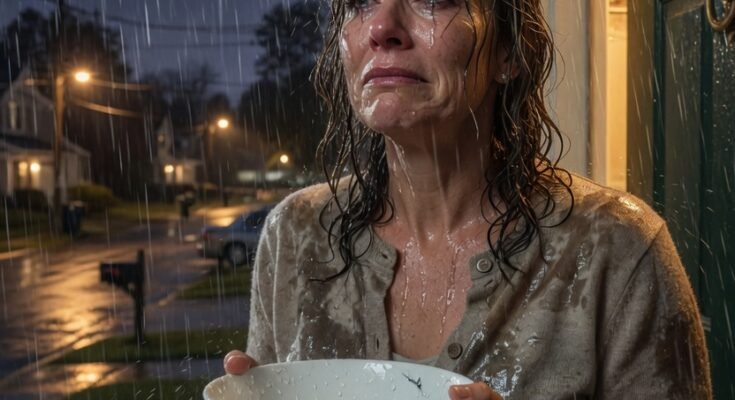
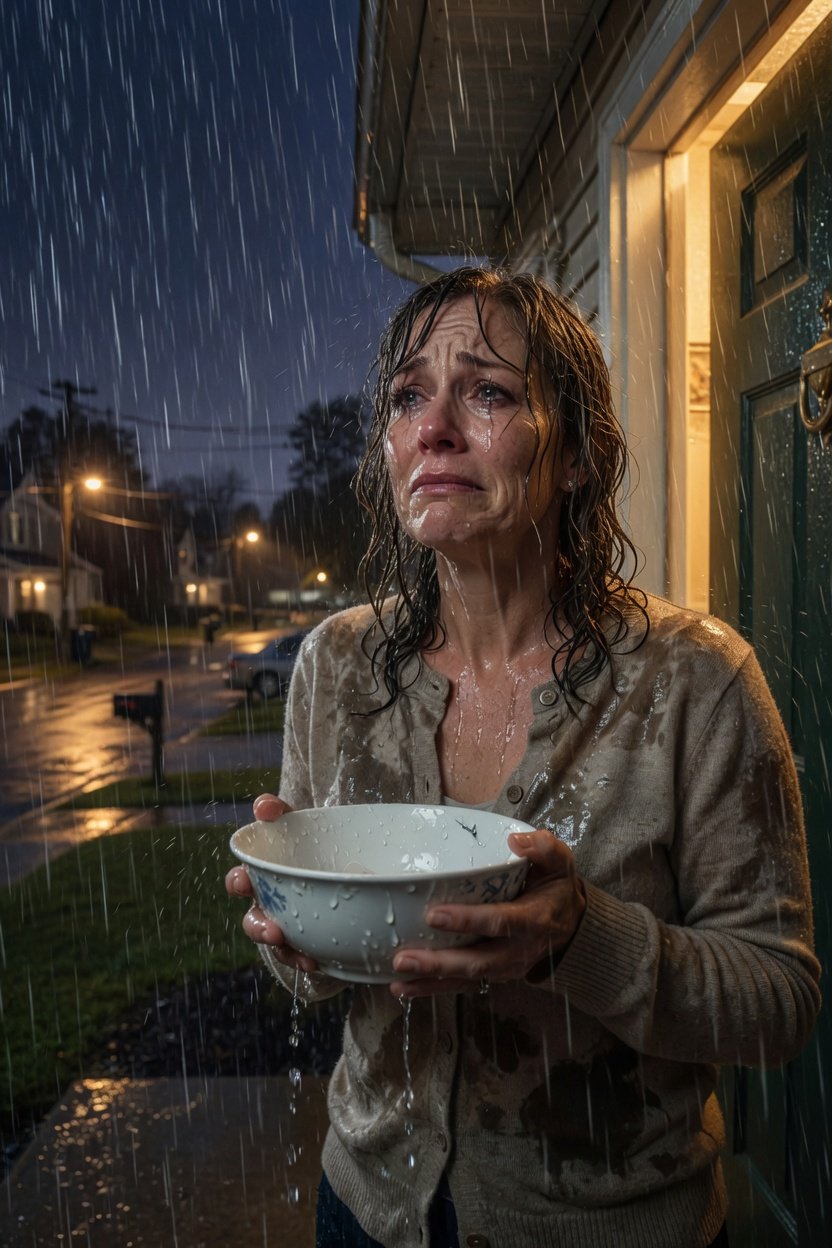
The irony was so thick I could almost taste it. This woman had spent two years trying to evict me through a thousand paper cuts, and now she was a beggar at my threshold. Part of me wanted to laugh. I wanted to tell her about the thirty-seven reports. I wanted to remind her of the “chromatic harmony” she valued so much more than neighborly kindness. I wanted to shut the door and let the rain wash away her pride just as she had tried to wash away my peace.
“Come in,” I said instead. My voice felt foreign to my own ears, heavy with a pity I didn’t want to feel.
She stumbled into my entryway, leaving a trail of muddy water on the hardwood floor—a floor she had once reported to the board for being “visible through the window and inconsistent with the neighborhood’s interior aesthetic standards.” I led her to the kitchen, the very room where I had sat up late at night writing checks to the HOA. I made her tea and heated up a large bowl of the beef stew I’d made the night before.
As she ate, the story spilled out in frantic, jagged pieces. Harold hadn’t just walked out; he had been planning his exit for years. He had systematically drained their joint accounts, funneled money into offshore holdings, and liquidated their investments. He had even stopped paying the mortgage months ago, intercepting the mail so she wouldn’t know. The house—the shrine of perfection she had guarded so fiercely—was in active foreclosure.
“I was so focused on the rules,” she sobbed, clutching the warm bowl as if it were the only solid thing left in her world. “I thought if everything outside looked perfect, if everyone followed the rules, then nothing could go wrong inside. I thought if I controlled the neighborhood, I could control my life. I thought if I stayed busy correcting everyone else, I wouldn’t have to look at the cracks in my own marriage.”
I sat across from her, watching the woman who had been my personal demon crumble into a heap of regret. The reports hadn’t been about me. They were her desperate attempt to maintain order while her own world was rotting from the center. It didn’t excuse the fines, the stress, or the tears she had caused me, but it stripped away her power. She wasn’t a villain anymore; she was just a broken, elderly woman with nothing left but the clothes on her back and an empty stomach.
Over the next week, the neighborhood dynamic shifted. I didn’t just give her food; I gave her my lawyer’s phone number. I helped her pack what Harold had left behind before the bank came for the keys. I even helped her load her remaining possessions into a small U-Haul. On her final day, she stood by her mailbox one last time and handed me a thick, manila envelope.
“What’s this?” I asked, fearing another citation.
“The thirty-eighth report,” she said, a ghost of a smile touching her lips for the first time. “I wrote it this morning.”
I opened the envelope. It wasn’t a complaint. It was a detailed, thirty-page confession addressed to the HOA board, admitting that every single report she had filed against me was fabricated or wildly exaggerated out of personal malice. She had CC’d the neighborhood’s legal counsel, demanding that every fine I had paid be reimbursed immediately from the HOA’s reserve fund, citing her own mental instability as the cause for the false reports.
She moved in with a sister three states away that afternoon. The house next door sat empty for months, its lawn growing tall and its mulch fading to a dull gray. Every time I looked at it, I didn’t see a victory. I saw a reminder that behind every “Karen” is often a person terrified of the chaos they can’t control.
Two weeks later, a check arrived in the mail—a full refund of every dime she had cost me, plus interest. I used a portion of it to buy a new, non-approved, extra-loud wind chime. But every time it rings in the breeze, I don’t think about the noise. I think of the woman who had to lose everything just to find her humanity.
Watch movie:

*Content is hosted on a partner site.
