The hallway leading to Sterling’s office felt different this time. The last time I was here, I was a trembling student pleading for a chance. Now, I was a published author in a journal that Sterling himself had been rejected from three times in the last five years—a fact I had discovered during my research. I didn’t knock. I simply opened the door.
Sterling looked up, his glasses sliding down his nose. “Alex? I’m busy. If this is about your final grade, the records are already closed.”
I didn’t say a word. I walked to his desk and placed the gold envelope directly on top of the stack of papers he was grading. “A gift, Professor,” I said quietly. “I thought you might want to see what ‘speculative fiction’ looks like when it’s peer-reviewed by the top experts in the country.”
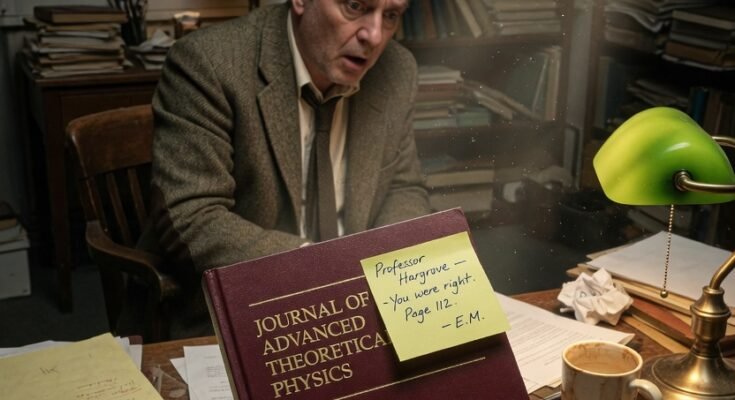
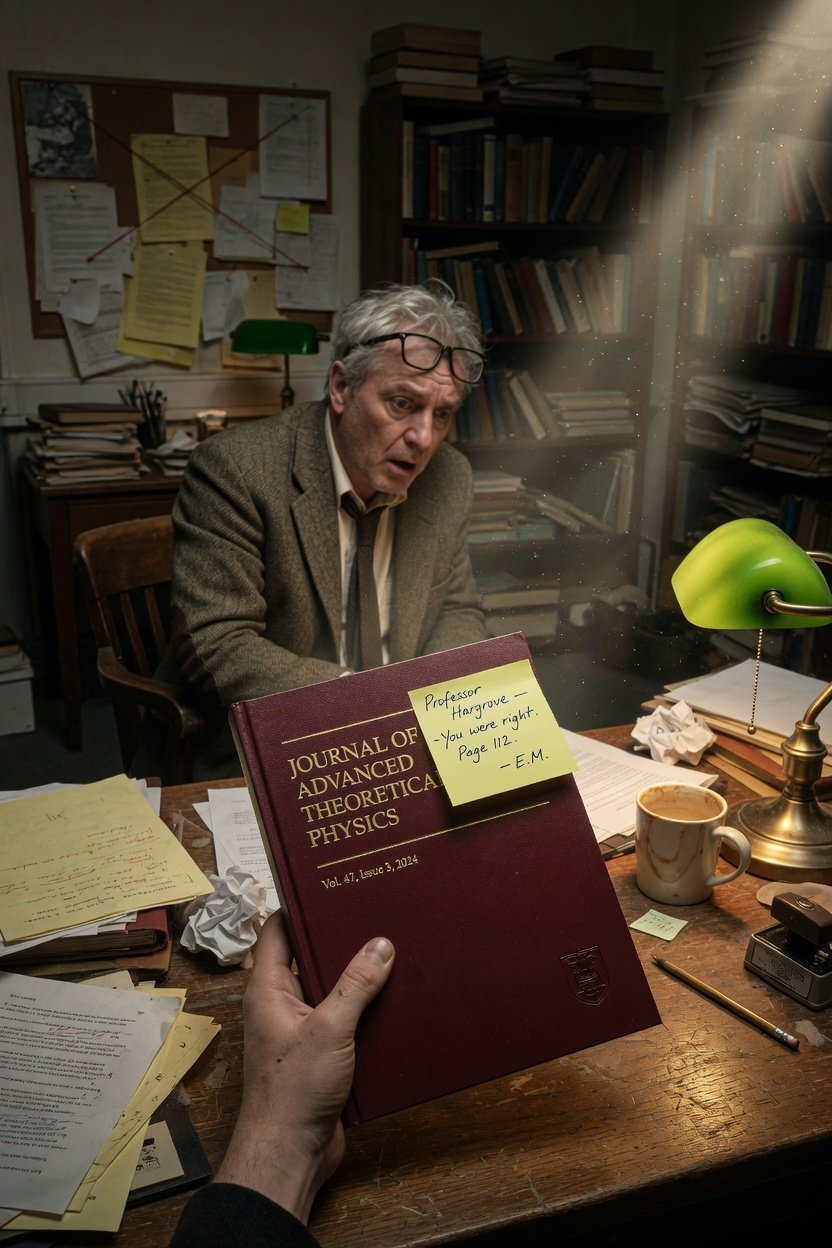
He frowned, his fingers fumbling with the seal. As he pulled out the glossy journal, his face went from a pale ivory to a dull, mottled grey. His eyes locked onto the cover. There it was, in bold letters: *The Architecture of the Mind: A New Path Forward by Alex Thorne.* Below the title was a testimonial from the Dean of a prestigious Ivy League research center, calling the work “visionary.”
Sterling flipped through the pages, his hands actually shaking. He looked for the “leaps in logic” he had mocked, but all he found were the same charts and data points he had marked with red ink months prior. I pulled the sticky note I had attached to the first page and pointed to it. It read: *“To Professor Sterling: Thank you for the ‘D.’ It reminded me that when someone tries to bury your talent, they are usually just afraid of how much brighter it shines than their own. Best regards, a published author.”*
“This… this must be a mistake,” he stammered, his arrogance finally cracking like dry parchment. “The board… they must not have seen the flaws I pointed out.”
“On the contrary, Professor,” I replied, leaning over his desk, reclaiming the power he had stolen from me. “The board saw everything you missed. They saw a future for this field that you’re too stuck in the past to recognize. By the way, I’ve been invited to present this at the national conference next month. I believe you’re on the waiting list for a ticket? Maybe I can get you a seat in the back.”
The silence in the room was absolute. Sterling looked smaller than I had ever seen him. He wasn’t a gatekeeper anymore; he was just an old man in a dusty room, holding a piece of history he had tried to kill.
I walked out of that office and didn’t look back. A week later, I heard through the grapevine that the University’s department head had seen the journal and was “curious” as to why such a masterpiece had originally been graded so poorly by one of their own faculty. Sterling was placed under internal review for his grading practices. As for me, the “D” remained on my transcript as a badge of honor—a reminder that the only person who can truly define your worth is you. I went on to accept a full-ride fellowship, and every time I write a new paper, I think of that red pen, and I smile.
Watch movie:

*Content is hosted on a partner site.
