
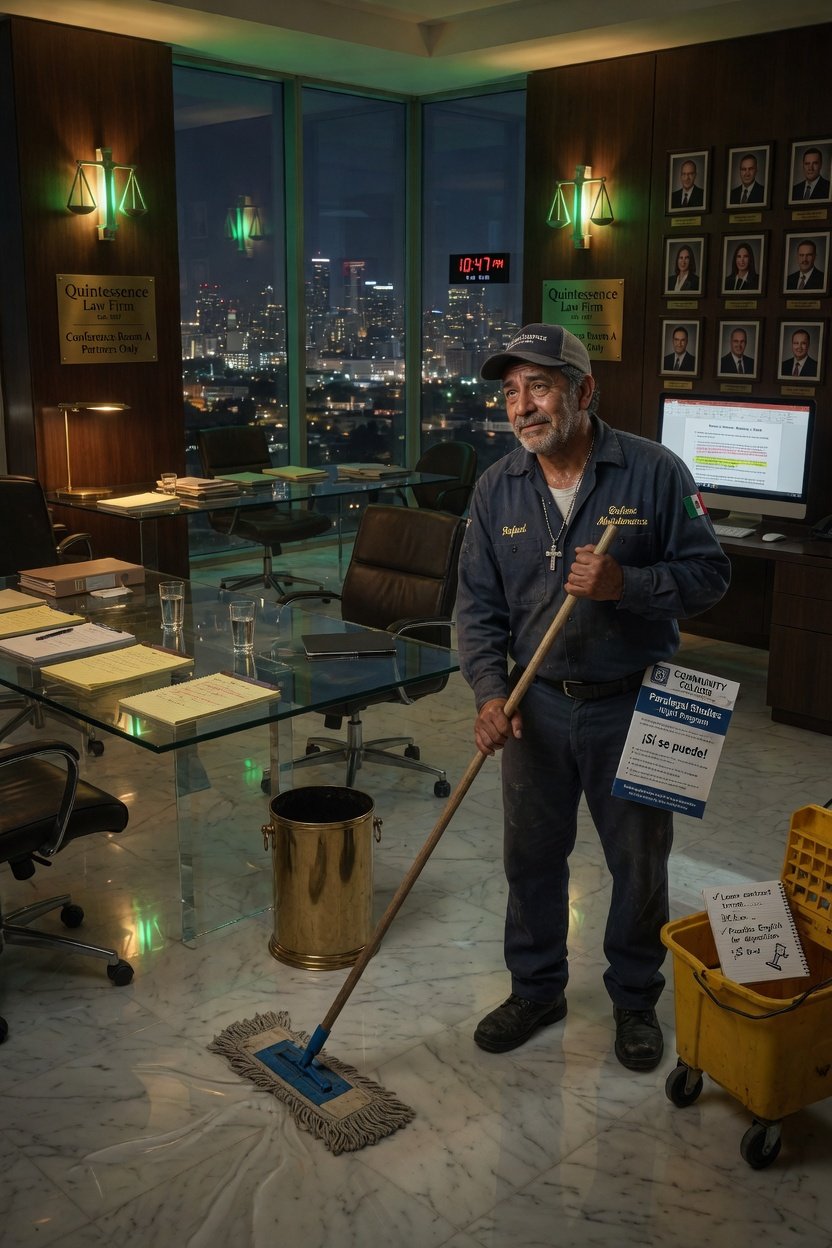
As conversations swirl within the firm about how to handle Mr. Thompson’s erroneous assumption about Rafael, the atmosphere thickens with tension. The three partners — Melissa, John, and Sofia — gather in a conference room, debating their next move. Melissa, always the pragmatic one, insists they should simply let it go. “This client has brought millions to our firm. We can’t afford to lose him over a small misunderstanding,” she argues, tapping her fingers anxiously on the table.
John, the optimist, harbors reservations. “But what about Rafael? He deserves to be seen for who he is, not mistaken for a partner. If we keep up this charade, are we not perpetuating the very prejudice this client embodies?” he counters, his voice steady yet filled with conviction. Meanwhile, Sofia, who has seen her fair share of injustices, leans toward honesty. “We need to rectify this before it becomes a scandal. If we exploit Rafael’s situation for profit, we become part of the problem.”
As their discussion intensifies, they consider Rafael’s perspective. Is he simply a backdrop to their ambitions, or does he hold the power to show them a profound truth? They decide to invite Rafael to the meeting, believing he deserves a voice in the matter. The janitor, bewildered yet curious, enters the room.
The partners explain the situation carefully, sensing Rafael’s anxiety and uncertainty growing. “Rafael,” John begins gently, “you’ve been mistaken for a partner. We’re faced with a decision. Let’s be honest, this misunderstanding could be advantageous for the firm, but it could also silence your true identity.”
Rafael takes a deep breath. “I’ve always believed hard work speaks for itself,” he starts, his accent thick yet filled with strength. “If Mr. Thompson thinks I’m a partner, does that mean he respects me? Or is it just a convenient mistake? I want to be proud of who I am, not someone else’s illusion.”
The conversation opens gateways to deeper dialogues about race and identity. The partners realize that this isn’t just about business; it’s about their values and the kind of firm they wish to foster. They discuss whether maintaining the façade aligns with their principles or compromises their ethics.
Eventually, a consensus begins to form. They recognize that they cannot silence the truth. In a surprising twist, they decide to confront Mr. Thompson. At the next meeting, they will introduce Rafael officially — not as a mistaken partner but as the hardworking janitor who plays an essential role in the firm’s successes.
In the days leading up to this meeting, Rafael finds renewed hope. This unexpected turn has empowered him. He knows that the road ahead will be fraught with challenges, particularly with a client like Thompson, who embodies the prejudices of their society. However, standing alongside the partners, he feels a newfound strength — one that is grounded in authenticity and the courage to be seen.
On the day of the meeting, as Rafael walks into the conference room, he feels a mix of anxiety and anticipation. Will Mr. Thompson accept this new reality? Will he react with anger or respect? The partners exchange nervous glances, standing united, ready to face a client’s misguided views head-on. As the door swings open, all eyes turn to them. In this pivotal moment, the reality of their choice crystallizes: they are not just representing a law firm; they are reshaping perceptions and fighting for dignity.
The confrontation with Mr. Thompson proves to be both electrifying and sobering. As he sits across from Rafael, the atmosphere is charged with tension. How will the client react when the truth is laid bare? Would he embrace this unexpected revelation or succumb to his biases? The answers linger in the air, heavy with potential…
Watch movie:

*Content is hosted on a partner site.
