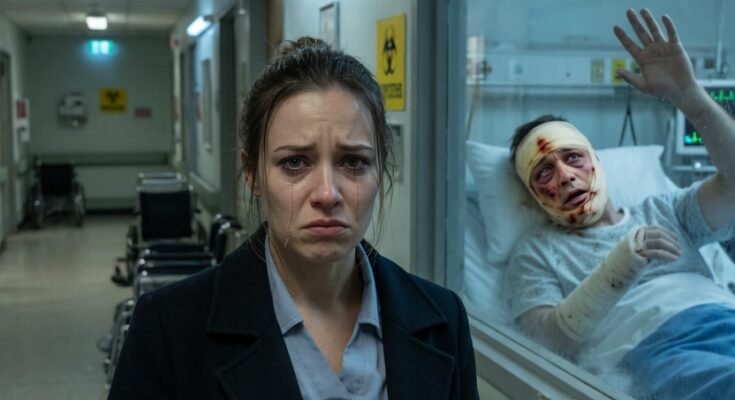
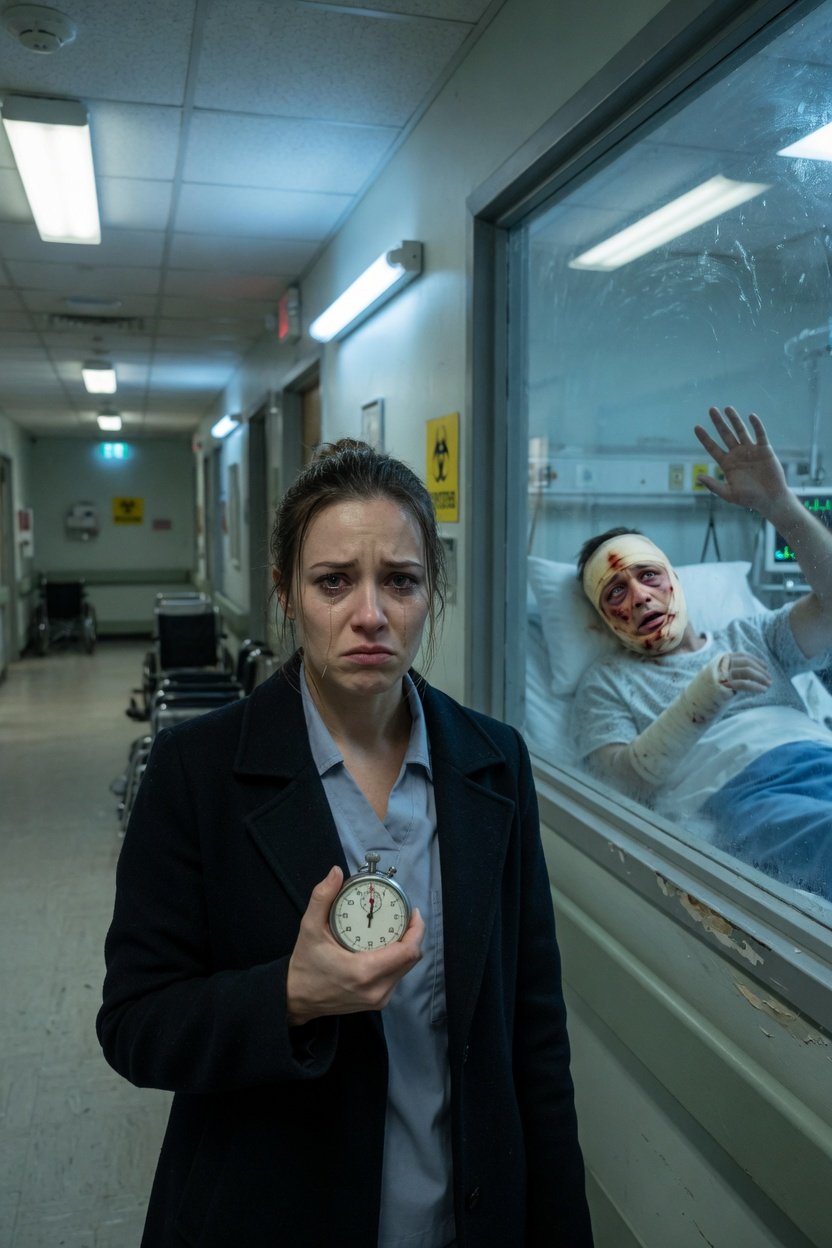
Marcus’s heart monitor began to beep frantically. His eyes went wide, the pupils dilating with a mixture of terror and realization. He tried to feign confusion, a pathetic groan escaping his throat, but I simply clicked the stopwatch. The rhythmic, mechanical ticking filled the small ICU room, cutting through the hum of the life-support machines.
“Forty-five seconds, Marcus,” I said, my voice devoid of any warmth. “I know about the ‘Ghost File.’ I found the encrypted drive you left in our old cat’s carrier when you moved out. I couldn’t crack the final layer of the password, but I know it’s tied to a physical location. Your mother will be here in ten hours. She’ll sign the forms, sure, but the surgeons already told me that if you don’t go under in the next thirty minutes, you’ll lose the leg. Maybe both.”
He looked at the nurse, who was standing by the door, looking confused by our hushed, intense conversation. He realized I wasn’t there as his grieving girlfriend. I was there as the person he had sharpened into a weapon through his own cruelty.
“The… the old storage unit,” he wheezed, the words bubbling through the blood in his mouth. “Under the floorboards. The blue folder. The password is your mother’s birthday. Sarah, please… sign it. I’m dying.”
I didn’t flinch. I waited until the stopwatch hit the sixty-second mark before clicking it off. I picked up the medical consent forms. But I didn’t sign my name. I took the black permanent marker and wrote “VOID” in massive, aggressive strokes across every single page.
“What are you doing?” he screamed, a thin, raspy sound.
“I’m resigning,” I said. “I am no longer your proxy. I’ve already informed the hospital administration that our relationship ended six months ago and that my status as your contact was a clerical error. They’re currently processing the emergency judicial override to let the Chief of Surgery make the call. You’ll get your surgery, Marcus. You’ll live. But you won’t live the life you stole from me.”
As I walked out of the ICU, I didn’t head for the exit. I headed for the hospital’s lobby, where two men in charcoal suits were waiting. I had called the federal investigators the moment I left my apartment.
“He gave it up,” I told them, handing over the stopwatch as if it were a trophy. “The storage unit. The blue folder. Everything you need to prove the IPO fraud.”
One of the agents nodded. “You realize this means the company’s stock will plummet to zero? Any settlement or alimony you might have hoped for will be gone.”
I smiled, and for the first time in six months, it felt real. “I don’t want his money. I want his ‘status’ to be a prison jumpsuit.”
A week later, Marcus’s mother, Elena, tried to sue me for “malicious interference” with his medical care. The lawsuit was dropped within forty-eight hours when the feds raided Marcus’s hospital room to serve him with an indictment. The model he had replaced me with was already on a yacht in the Mediterranean with his former CFO, having sold her story to a tabloid for six figures.
Because I was the whistleblower, I was granted a percentage of the recovered hidden assets as part of the SEC’s bounty program. It wasn’t two hundred million, but it was enough. I bought a small, quiet house by the coast and opened a clinic for low-income families—people who would never be “in a different league.”
I visited Marcus one last time before his sentencing. He sat in a wheelchair, his leg saved but his empire in ashes. He asked me why I did it—why I didn’t just take the money and stay quiet.
“You told me you needed a partner who reflected your brand,” I told him, sliding a copy of his indictment across the glass. “And now you have a legacy that reflects your character. We’re finally even.”
Watch movie:

*Content is hosted on a partner site.
