The new hire, a kid named Tyler, probably spent his first three hours on Monday wondering why none of the administrative passwords worked. He likely thought it was a technical glitch when the main server began a slow, automated wipe of the non-essential internal communications. What he didn’t realize was that the “glitch” was a secondary protocol. While the internal system was cleaning itself of my personal footprints, a massive, 40-gigabyte encrypted file was being uploaded directly to the secure portal of the Internal Revenue Service and the Department of Justice.
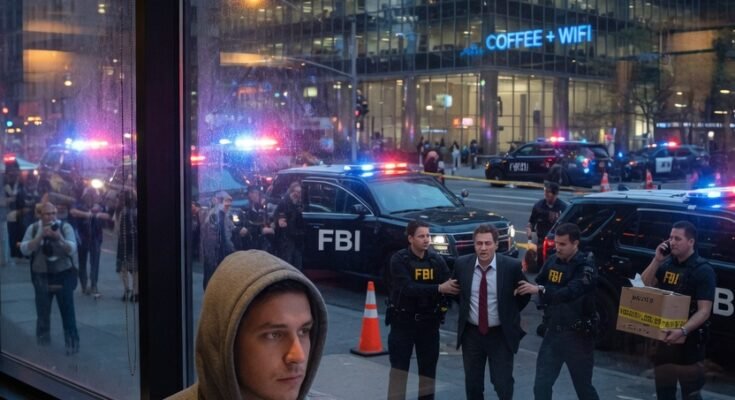
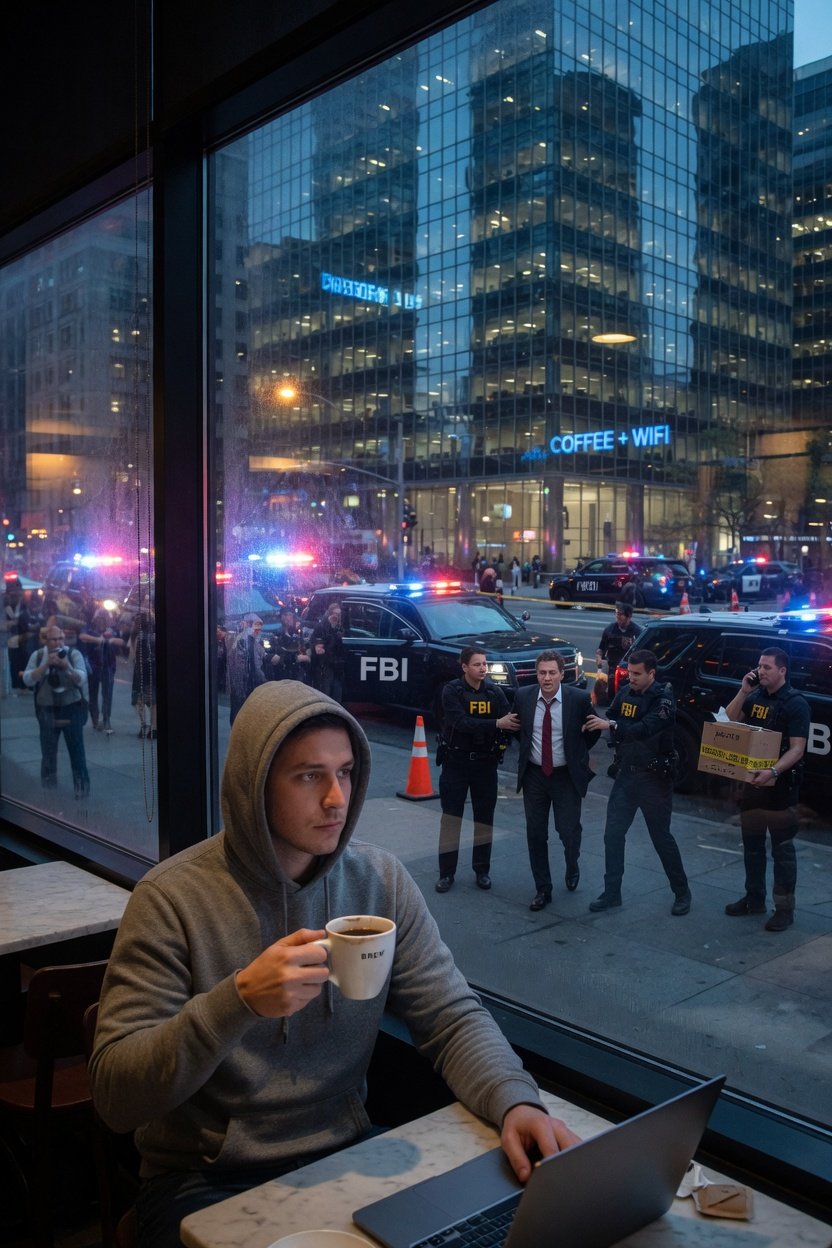
I sat in a small coffee shop across the street from the Sterling Building, watching the revolving doors. At exactly 10:15 AM, the black SUVs pulled up. It wasn’t just a few agents; it was a full-scale tactical team from the FBI’s White Collar Crime division, accompanied by investigators from the SEC.
As they stormed the lobby, I took a slow sip of my black coffee. I could almost imagine the look on Marcus’s face. He would be arrogant at first, demanding to see a warrant, puffing out his chest and threatening to call the Governor. But his bravado would shatter the moment they opened his “private” safe—the one he thought only he had the code for. I had found that code etched into the underside of a desk drawer months ago.
Inside that safe wasn’t just cash. It held the physical “blueprints” for a scheme that had defrauded the government of over $200 million in tax revenue over a decade. Marcus had been skimming from pension funds, re-routing the money through a series of fake non-profits, and then “donating” it back to himself through offshore entities. He thought he was a genius. In reality, he was just a thief who had forgotten that his most “loyal” employee was also his most observant.
The scene that followed was cinematic. I watched through the glass windows of the cafe as Marcus Sterling was led out in handcuffs. His expensive Italian suit was rumpled, and his face was the color of spoiled milk. He looked around wildly, perhaps searching for someone to blame, someone to scream at. He saw me. Our eyes locked for a fleeting second across the busy street. I didn’t smirk. I didn’t wave. I simply raised my coffee cup in a silent toast to his hubris.
By Tuesday, the company’s assets were frozen. The “new hire” was out of a job before he’d even finished his first orientation video. The board of directors scrambled to distance themselves, but the evidence I provided was too thorough; it implicated several of them in the cover-up.
As for me, the aftermath was life-changing in a different way. Under the Whistleblower Protection Act, I was entitled to a percentage of the recovered funds. When you’re dealing with a $200 million fraud case, that percentage is more than enough to ensure I never have to work for a man like Marcus Sterling ever again.
I spent the next few weeks sitting on a beach in a country that actually respects its tax laws, reading the headlines about the “Sterling Scandal.” People asked me if I felt guilty for destroying a multi-million dollar company and putting hundreds of people out of work. My answer was always the same: I didn’t destroy the company. Marcus destroyed it the moment he decided that greed was more important than integrity. I just happened to be the one who turned on the lights so everyone could see the rot.
The replacement he hired on Monday never stood a chance. You can’t build a future on a foundation made of lies, especially when the person you just fired holds the keys to the truth. Marcus learned the hard way that the most dangerous person in the room isn’t the one who shouts the loudest—it’s the one who listens, records, and waits for the right moment to speak.
Watch movie:

*Content is hosted on a partner site.
