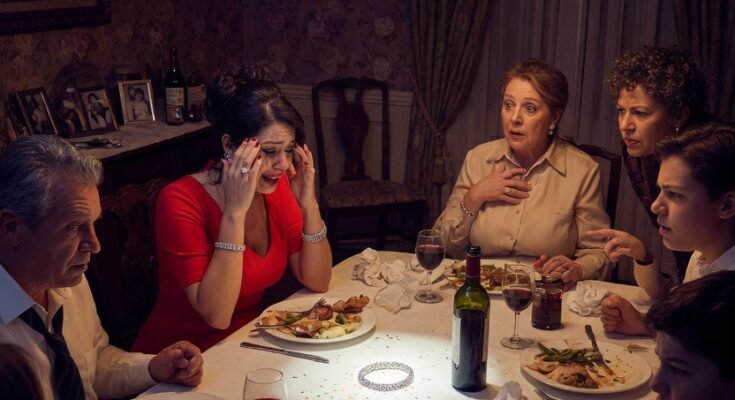
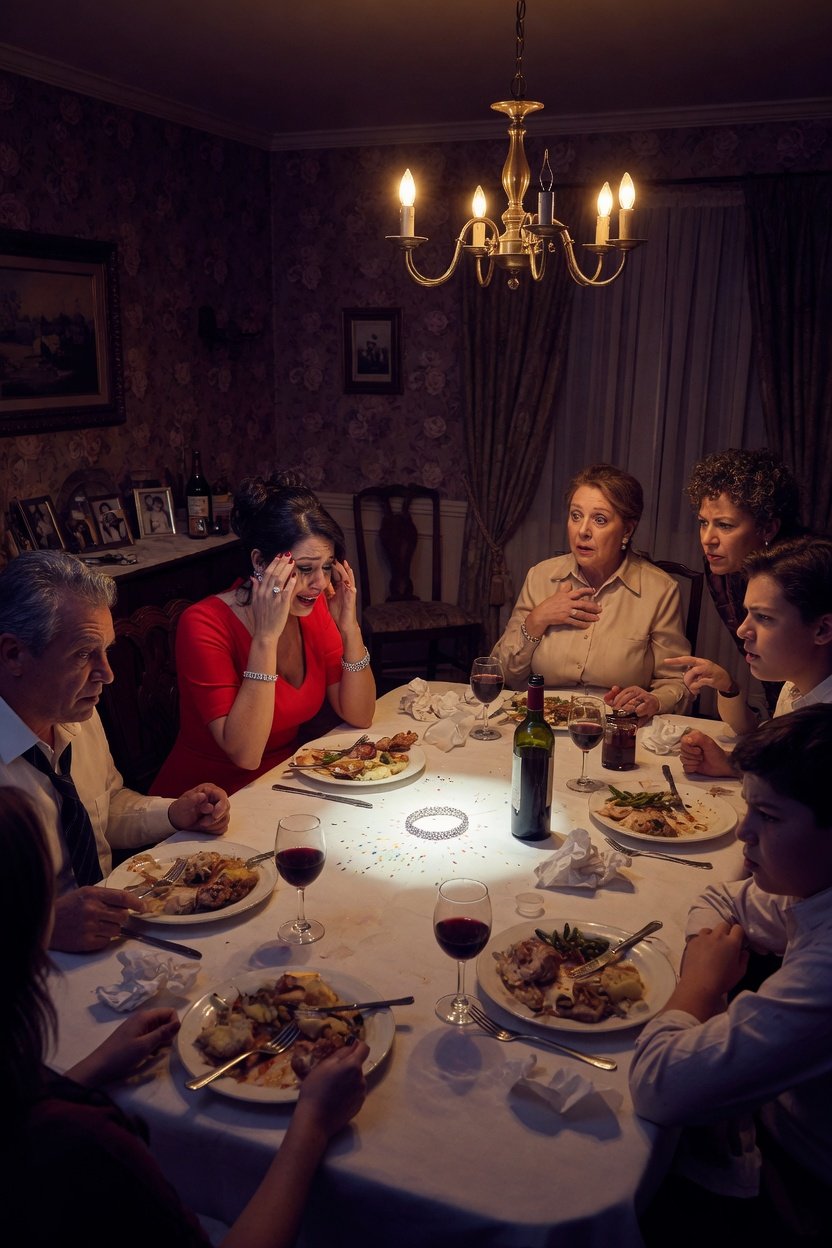
I didn’t chase after them. I didn’t scream or cry. I sat in the silence of my empty dining room for an hour, the diamond bracelet glinting mockingly on the mahogany table. My heart was racing, not with guilt, but with a cold, calculated fury. I opened my laptop and logged into the cloud server for my home security system.
The footage was crystal clear. I fast-forwarded to the moment we were in the kitchen. The camera angled above the refrigerator captured everything. I watched myself at the sink, focused on rinsing lettuce. Sarah was standing near the counter where my handbag was hung on the back of a chair.
In the video, Sarah looks around to ensure no one is watching. Her expression shifts from the “sweet sister-in-law” mask to something sharp and predatory. With the precision of a seasoned pickpocket, she unclips the bracelet from her own wrist, slides it into the narrow side pocket of my purse, and then waits exactly four minutes before beginning her “frantic” search. The camera even caught the tiny, triumphant smirk she gave the hallway mirror before she started sobbing.
I didn’t send the video to Leo first. I knew he was too deep in her web to believe it without context. Instead, I created a group chat titled “Family Dinner – The Full Story” and added my parents, Leo, and Sarah. I didn’t type a single word. I simply uploaded the three-minute clip starting from the kitchen prep to the moment she “found” the bracelet in my bag.
The silence that followed was deafening. For twenty minutes, the “read” receipts appeared, but no one moved. Then, the typing bubbles started. My mother was the first to call, her voice cracking with shame. “Maya, oh my god… we are coming back. Please, we are so sorry.”
I told them not to bother. I wasn’t ready to see them.
An hour later, Leo showed up at my door alone. His eyes were bloodshot. He told me that when the video played on his phone in the car, Sarah had tried to grab the device and throw it out the window. When that failed, she transitioned from “victim” to “aggressor,” screaming that she only did it because I “made her feel inferior” and that she needed to “take me down a notch” so she could feel secure in the family.
Leo was broken. He realized that every story she had told him over the last three years—every “mean comment” I supposedly made, every “jealous look”—was a calculated lie designed to isolate him from his only sibling. He spent the night on my couch, crying and apologizing.
The fallout was nuclear. My parents were so horrified by their own part in the gaslighting that they offered to pay for a vacation for me just to get away. Sarah, realizing the “jealousy” narrative was dead, tried to pivot to a mental health crisis excuse, but the footage was too damning. The coldness and deliberation in her eyes as she planted the jewelry weren’t the actions of someone in a “crisis”; they were the actions of a saboteur.
Leo filed for divorce two weeks later. He found out she had also been dipping into their joint savings to fund a lifestyle she couldn’t afford, all while telling him that I was the one obsessed with money.
I learned a valuable lesson that day: people who accuse you of being jealous are often projecting their own insecurities onto you. And in the digital age, the truth doesn’t just have a voice—it has 4K resolution. I haven’t fully forgiven my parents or Leo yet. Trust takes time to rebuild. But I kept the footage. I kept it as a reminder that no matter how loud a lie is, the truth only needs to be seen once to silence it forever.
Watch movie:

*Content is hosted on a partner site.
