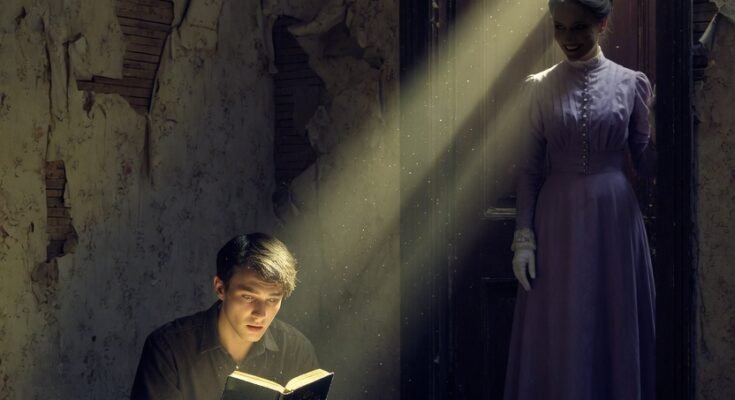
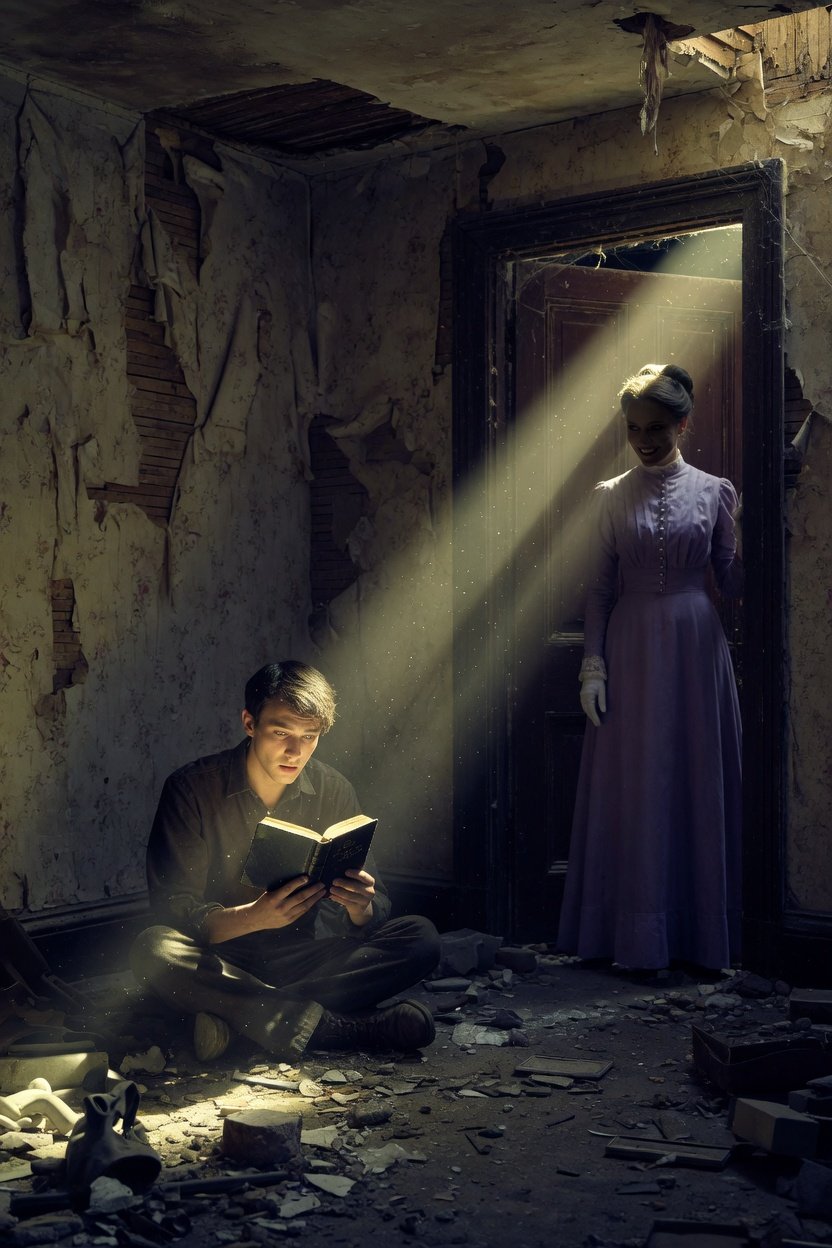
The diary fell from my hands, thudding against the debris-strewn floor. My heart hammered against my ribs like a trapped bird. If the diary was true, my mother hadn’t died of natural causes. She had been murdered in a cold, calculated replacement scheme orchestrated by my father and the woman who now called herself my stepmother.
I looked up at the ceiling, hearing the muffled footsteps of Elena moving about in the kitchen directly above me. The sound, once comforting, now felt like a death knell. I needed to get out of the house, but I needed more proof. I began to scan the hollow space behind the wall where the diary had been hidden. Tucked further back was a small manila envelope. Inside were photographs—dozens of them.
They weren’t photos of my mother. They were photos of Elena, taken years before she met my father. But in each photo, she was undergoing a transformation. In the oldest ones, she looked nothing like my mother. In the newer ones, her nose had been altered, her jawline shaved, her hair dyed and styled to match old family portraits. It was a surgical metamorphosis.
“Looking for something, sweetheart?”
The voice was soft, melodic, and came from the doorway. I bolted upright, shoving the envelope behind my back. Elena was standing there, holding a tray with two glasses of iced tea. She looked radiant, her eyes crinkling in that familiar, maternal way that I now realized was a practiced mask.
“Just… checking the structural damage,” I stammered, my voice trembling.
Elena stepped into the room, her gaze drifting to the leather-bound book lying open on the floor. Her smile didn’t falter, but her eyes went cold—void of any human warmth. “Your mother was always such a prolific writer. It was a shame she was so… unstable toward the end. The delusions were quite hard on your father.”
“She wasn’t delusional,” I whispered, the courage of the grieving finally overcoming my fear. “She knew what you were doing. She knew what *he* was doing.”
Elena set the tray down on a nearby crate. She didn’t deny it. She didn’t act shocked. Instead, she took a slow sip of her tea and sighed. “Arthur is a man of specific tastes. He loved the *idea* of your mother, but the actual woman was becoming… difficult. Aging is so unkind to the spirit, don’t you think? We simply provided him with a version that would never fade, never argue, and never leave.”
“You killed her,” I choked out.
“We gave her peace,” Elena corrected, her voice dropping an octave. “And we can give you peace too. You’ve always been so high-strung, just like her. It’s a hereditary trait Arthur was hoping we could ‘fix’ in the next generation.”
I heard the heavy thud of boots behind me. I turned to see my father standing in the shadow of the hallway. He wasn’t the grieving widower I had pitied for years. He looked rejuvenated, his face smooth and satisfied. He held a heavy wrench in his hand, his eyes fixed on the diary.
“I told you the pantry didn’t need renovating, son,” my father said, his voice devoid of emotion. “Some things are better left behind the walls.”
I realized then that the “vitamins” my mother mentioned weren’t for sleep—they were the beginning of the end. And as they both moved toward me in the dim light of the gutted kitchen, I saw the second glass of tea on the tray. It was waiting for me.
“Don’t worry,” Elena said, reaching out a hand that wore my mother’s wedding ring. “The transition is much easier when you don’t fight it. And I’ve already found someone who looks just like you to take your place. She’s been practicing your laugh for weeks.”
I lunged for the sledgehammer, but the heavy blow to the back of my head sent the world spinning into darkness. The last thing I heard was my father’s voice, calm and chilling: “Make sure the new one has better handwriting this time.”
Watch movie:

*Content is hosted on a partner site.
