A wave of global attention has been ignited following the circulation of striking footage showing Pope Leo XIV stepping beyond traditional Vatican security protocols during his recent visit to Africa. The images, captured by bystanders and local media, reveal moments that many are calling both unexpected and deeply moving.
The incident reportedly occurred during the Pope’s demanding 11-day, 11,000-mile journey across Cameroon, Angola, Equatorial Guinea, and Algeria—a trip already defined by its intensity and humanitarian focus. While the itinerary was carefully planned, what unfolded on the ground diverged in powerful ways from official expectations.
According to witnesses, the 70-year-old pontiff chose to step out from behind standard protective barriers, moving directly into the surrounding crowds. Security personnel, trained to maintain strict distance between the Pope and large public gatherings, were seen reacting quickly, visibly tense as the situation unfolded.
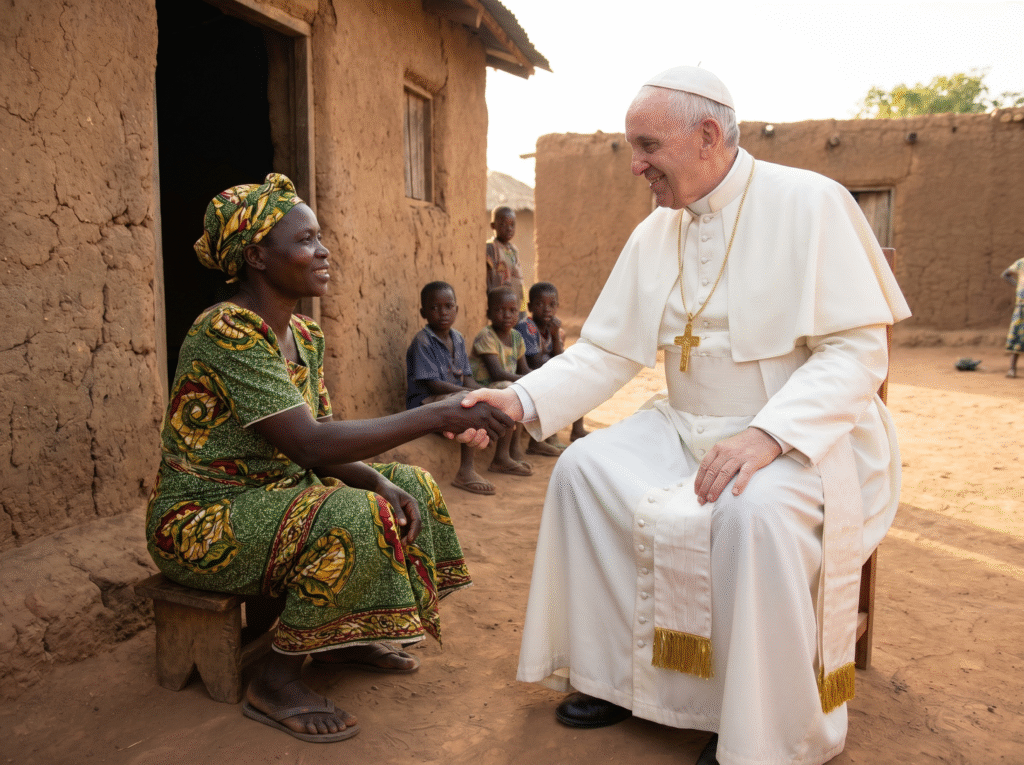
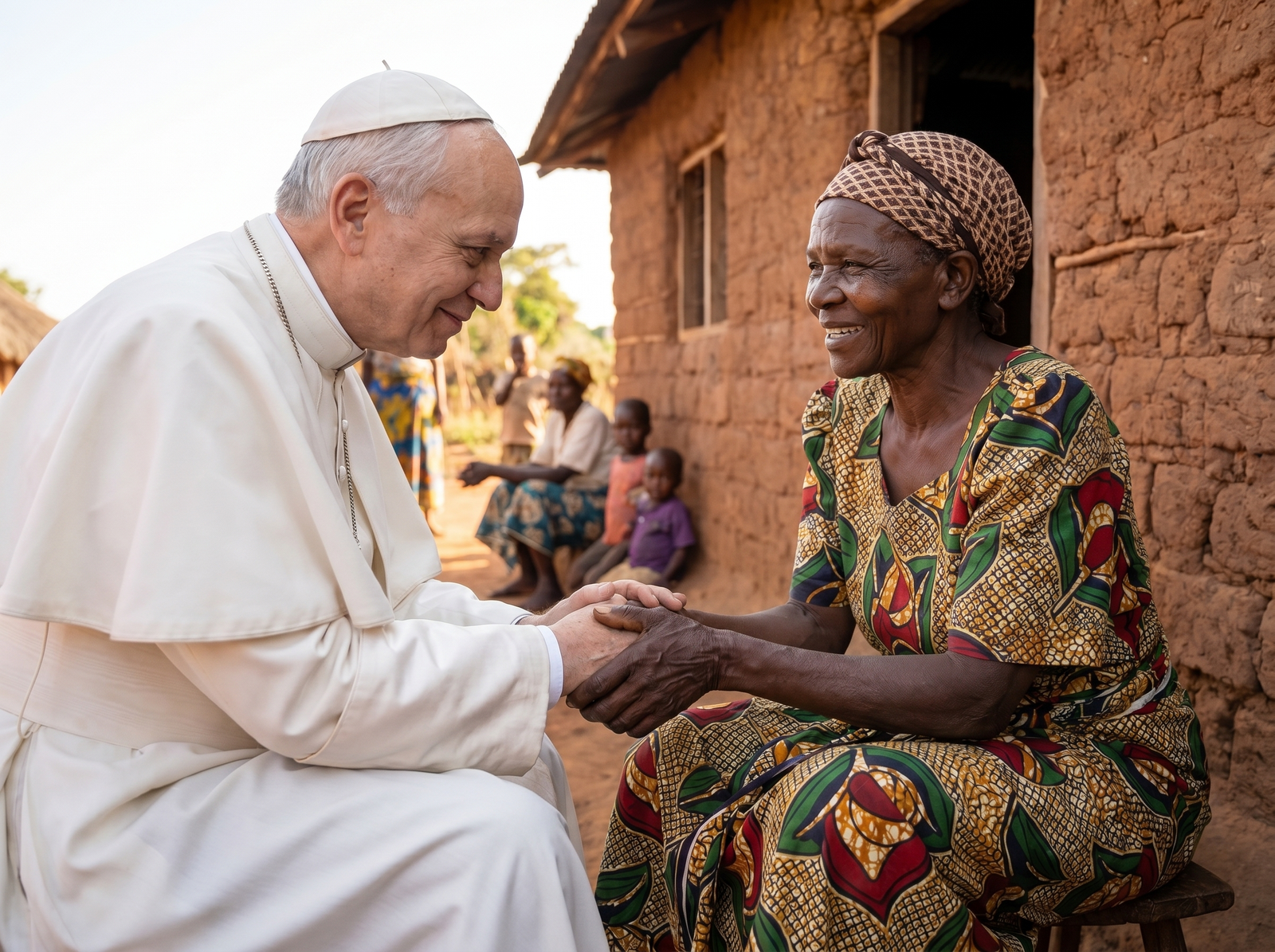
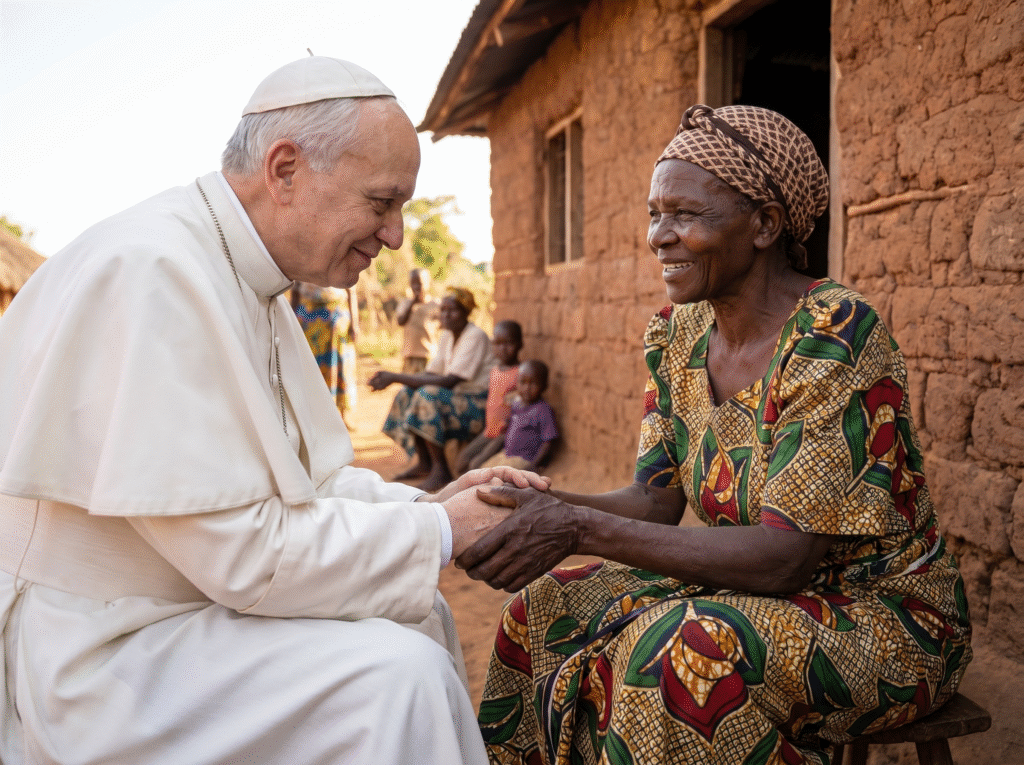
Yet the atmosphere among the crowd told a different story. Rather than chaos, there was a sense of calm, curiosity, and eventually, overwhelming emotion. People reached out—not in frenzy, but in quiet connection—and Pope Leo XIV responded in kind.
Observers described scenes in which the Pope paused to speak with individuals, exchanged smiles, and even held hands with local residents. These were not brief, symbolic gestures; they were moments of genuine interaction that seemed to dissolve the invisible lines often present between global figures and everyday people.
For many present, the encounter felt profoundly personal. There were no signs of hierarchy, no theatrical displays of authority—only a shared human experience unfolding in real time. In regions often shaped by complex histories and inequalities, the symbolism of such gestures carried significant weight.

Analysts have noted that these actions stand in stark contrast to the traditional image of institutional power. At a time when global discourse is frequently dominated by military rhetoric and geopolitical tension, the Pope’s approach appeared to prioritize presence over distance and empathy over control.
The Vatican has not issued a formal statement addressing the specific breach of protocol, but sources close to the Holy See emphasize that Pope Leo XIV has long advocated for what he calls a “fraternal presence”—a form of leadership rooted in closeness rather than separation.
During the trip, the Pope reinforced this philosophy through his public remarks, stating, “God desires peace for every nation, a peace that is not merely an absence of conflict but one that is an expression of justice and dignity.” The message, delivered in multiple locations, resonated strongly with local communities.
Scholars of religion and global leadership have interpreted the moment as a continuation of his broader mission: to challenge not only external systems of inequality but also the internal attitudes that sustain them. His rejection of what he has previously described as the “idolatry of self” appears central to this vision.
While some critics question the risks associated with such spontaneous actions, others argue that the impact cannot be measured solely in terms of protocol. For those who witnessed the event firsthand, the memory is likely to endure far beyond the visit itself.
As discussions continue worldwide, one point remains clear: Pope Leo XIV’s actions in Africa have sparked a renewed conversation about what leadership can look like in an increasingly divided world—less about distance and authority, and more about connection, humility, and shared humanity.
Watch movie:

*Content is hosted on a partner site.