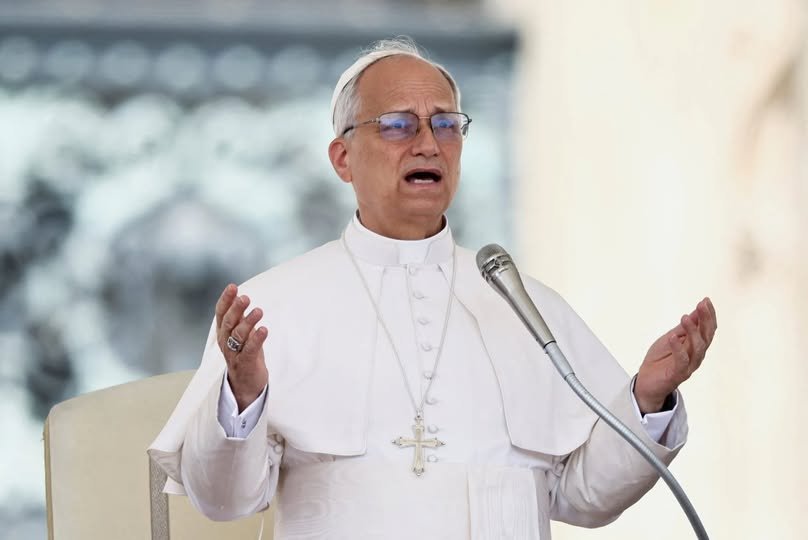
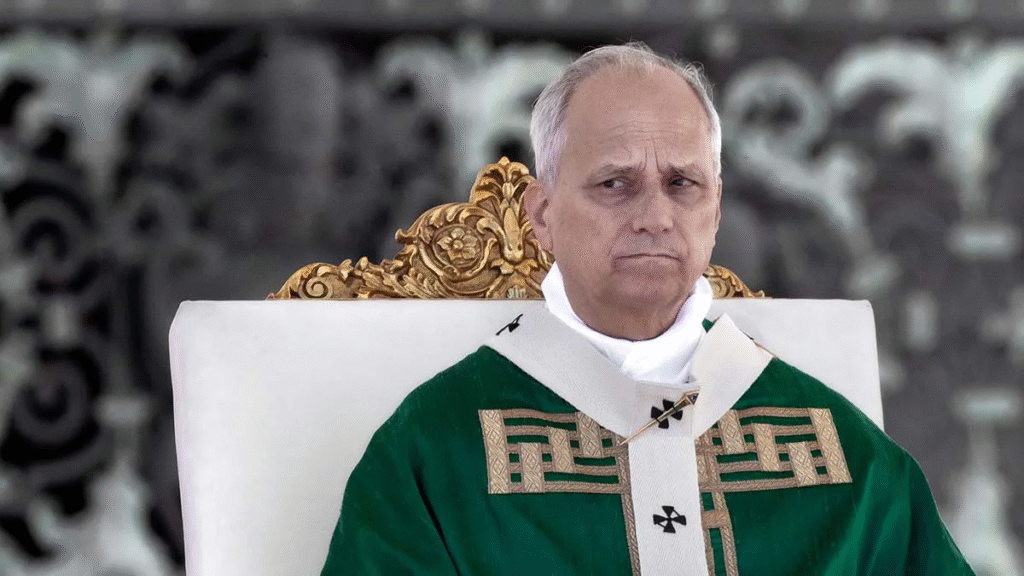
The fragile boundary between global politics and religious authority has been dramatically shaken following a public clash between former U.S. President Donald Trump and Pope Leo XIV. What began as a policy disagreement has now escalated into a highly visible and deeply symbolic feud, drawing attention from governments, religious communities, and political observers around the world.
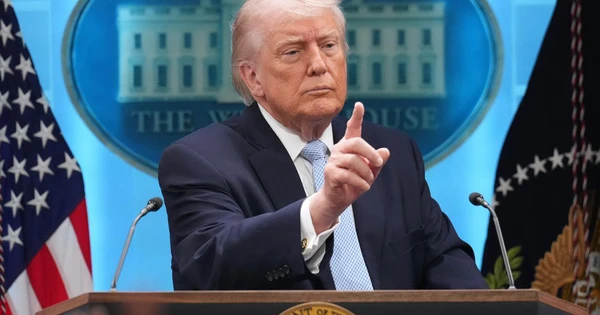
Donald Trump ignited the controversy through a strongly worded social media post in which he criticized Pope Leo XIV, urging him to “stop catering to the Radical Left.” The statement was not only রাজনৈতিক in tone but also unusually direct, especially considering the longstanding diplomatic caution typically observed between U.S. leaders and the Vatican.
The former president went further, portraying the pope as overly aligned with progressive ideologies and suggesting that such positioning undermines the moral authority of the Catholic Church. His remarks quickly spread across digital platforms, triggering both support and backlash from different ideological groups.
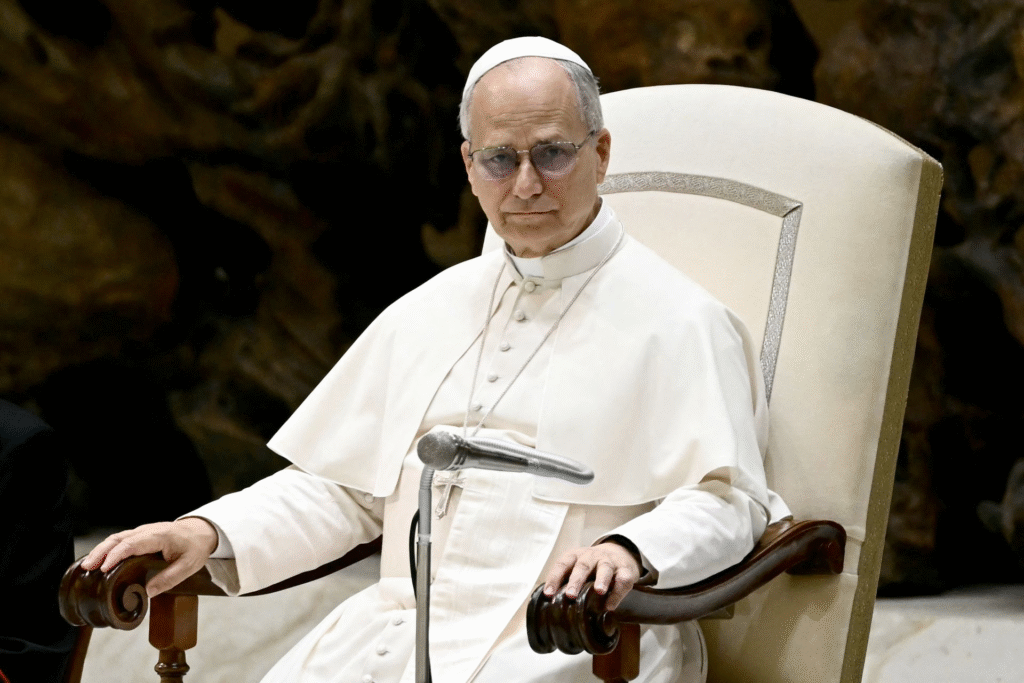
At the center of this dispute lies the ongoing conflict involving Iran, a geopolitical crisis that has sharply divided global opinion. Pope Leo XIV has consistently advocated for restraint, diplomacy, and humanitarian considerations, warning against further escalation and the devastating human cost of war.
Trump, on the other hand, has taken a much more aggressive stance, defending military readiness and criticizing what he perceives as weak or overly conciliatory approaches to international threats. His comments suggest that he views the pope’s position as not only misguided but potentially dangerous in a volatile global landscape.
This clash is particularly notable given that Pope Leo XIV is the first American pontiff in history, a fact that adds an extra layer of complexity to the situation. Rather than fostering closer ties, this shared national background appears to have intensified expectations—and disappointments—on both sides.
Political analysts have pointed out that Trump’s rhetoric reflects a broader pattern of challenging institutions he perceives as opposing his worldview, including international organizations and religious authorities. The Vatican, traditionally a voice for peace and moral guidance, now finds itself directly drawn into the sphere of partisan conflict.
Within the Catholic community, reactions have been mixed. Some conservative voices have echoed Trump’s concerns, arguing that the Church should avoid political entanglements. Others have defended Pope Leo XIV, emphasizing the Church’s long-standing role in advocating for peace, justice, and the protection of human life.
Internationally, the exchange has raised concerns about the erosion of diplomatic norms. Public criticism of a sitting pope by a prominent political figure is rare, and such statements risk deepening divisions at a time when global cooperation is already under strain.
The situation also highlights the increasingly blurred lines between political discourse and social media communication. What might once have been addressed through private diplomatic channels is now unfolding in real time before a global audience, amplifying tensions and reducing opportunities for quiet resolution.
As the world watches this unprecedented confrontation, one thing remains clear: the intersection of faith, politics, and global conflict is becoming more volatile than ever. Whether this feud will lead to further escalation or eventual reconciliation remains uncertain, but its impact is already being felt across multiple spheres of influence.
Watch movie:

*Content is hosted on a partner site.