The world finds itself on edge following a dramatic escalation surrounding the Strait of Hormuz, one of the most strategically vital waterways on the planet. A declaration hinting at an imminent blockade has ignited widespread concern, sending shockwaves through global markets, governments, and households alike. As uncertainty spreads, millions of Americans are reportedly turning to their phones, seeking clarity, reassurance, and ways to respond to what many perceive as a looming geopolitical crisis.
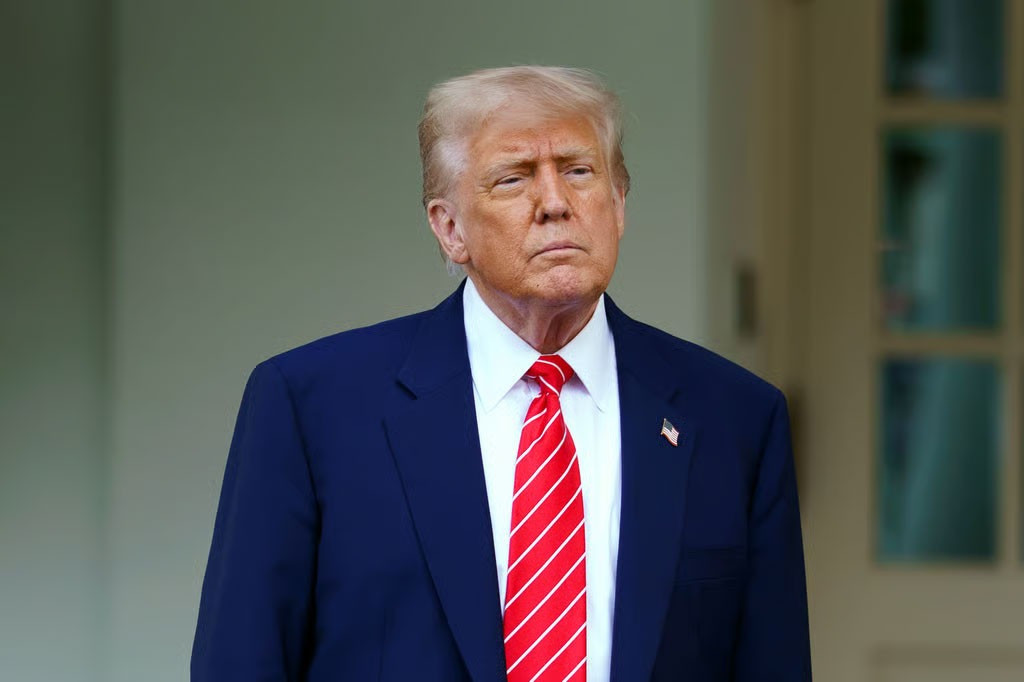
At the center of the storm is a stark and controversial message attributed to former U.S. President Donald Trump, whose statement warning that “the blockade will soon begin” has amplified fears of conflict. The phrasing, direct and unambiguous, has been interpreted by analysts as a signal of potential confrontation with far-reaching consequences. Whether rhetorical or strategic, the message has undeniably heightened tensions at a moment already fraught with instability.
The Strait of Hormuz, a narrow passage connecting the Persian Gulf to the global ocean, is responsible for a significant portion of the world’s oil supply. Any disruption in this corridor could trigger immediate economic repercussions, from surging energy prices to widespread supply chain disruptions. Experts warn that even the perception of a blockade can have cascading effects, influencing investor confidence and global trade patterns.
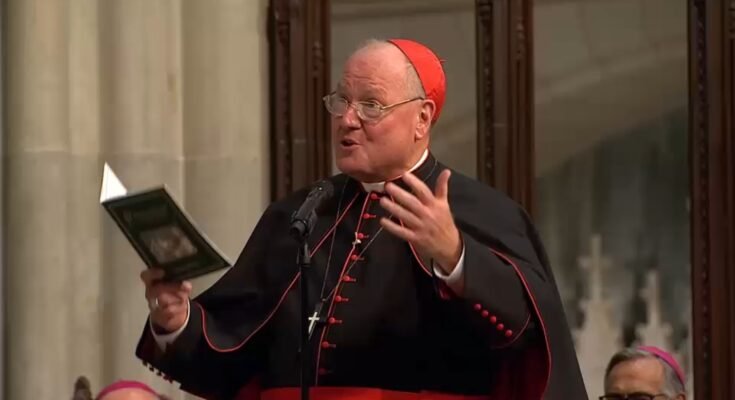
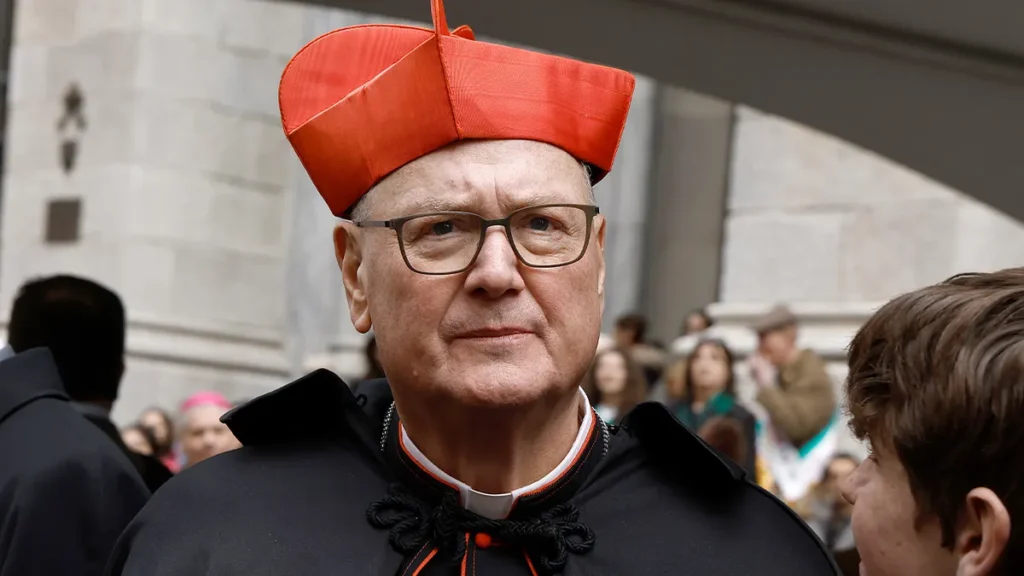
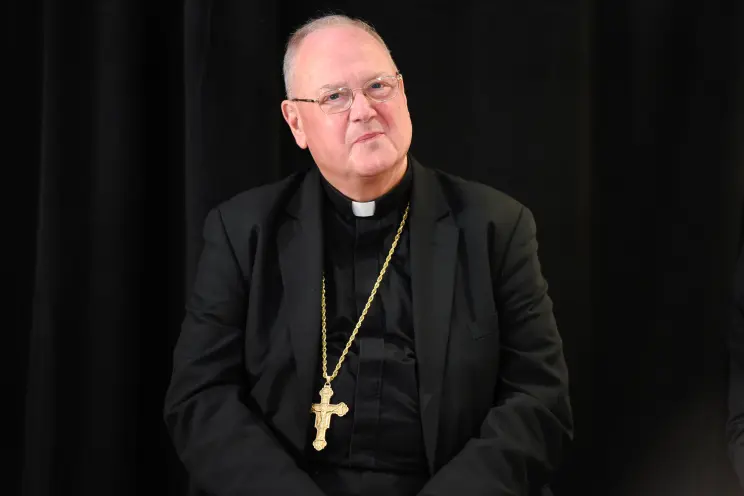
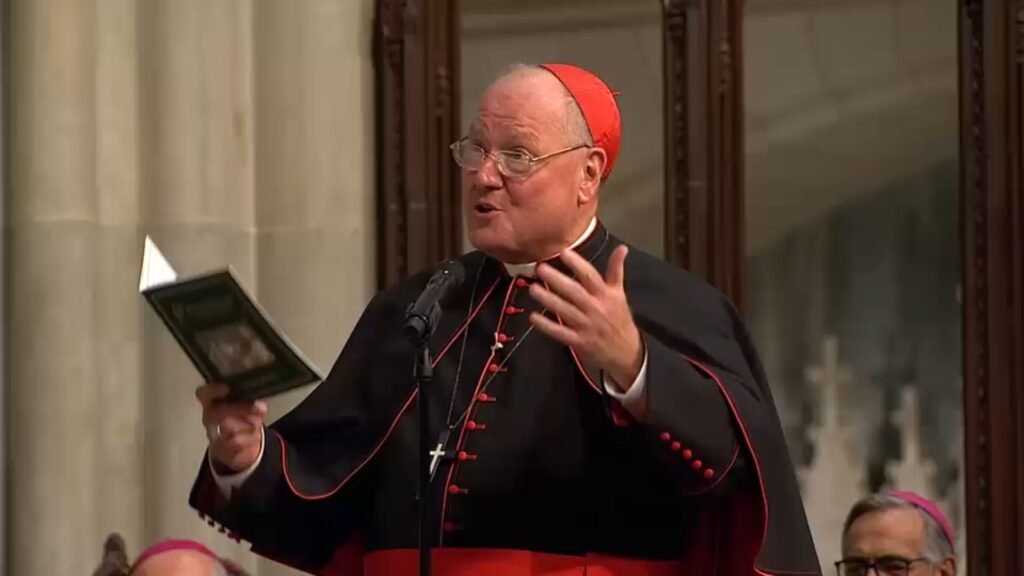
Amid this volatile backdrop, an influential religious voice has entered the global conversation. Cardinal Timothy Dolan, speaking with urgency and moral conviction, delivered a powerful appeal that has resonated across communities. His address was not framed as political commentary, but rather as a profound ethical warning about the consequences of escalation and the responsibility of leadership in moments of crisis.
Describing the situation as a “moral catastrophe in the making,” the Cardinal urged restraint and reflection. He emphasized that decisions involving military force and nuclear capabilities carry consequences that extend far beyond national borders. In his view, the juxtaposition of moral rhetoric with actions that could endanger millions represents a contradiction that must be confronted.
What made Cardinal Dolan’s message particularly striking was his direct appeal to ordinary citizens. He called on Americans, as well as individuals of conscience worldwide, to actively engage with their elected representatives. By encouraging people to contact senators and members of Congress, he framed civic participation as a crucial tool in preventing further escalation.
This call to action has reportedly sparked a surge in public engagement. Advocacy groups, community organizations, and individuals have mobilized rapidly, using digital platforms to amplify the message. Social media channels have become hubs of discussion, debate, and coordination, reflecting a growing sense of urgency among the public.
Political leaders, meanwhile, face mounting pressure to respond. Lawmakers are being asked to clarify their positions, address concerns about potential military actions, and outline steps to de-escalate the situation. The intensity of public scrutiny underscores the delicate balance between national security considerations and the demand for transparency and accountability.
Internationally, governments and diplomatic bodies are closely monitoring developments. Calls for dialogue and restraint have emerged from multiple quarters, highlighting the shared interest in maintaining stability in a region critical to global energy security. The situation has also reignited discussions about the importance of multilateral cooperation in managing crises of this magnitude.
Analysts caution that rhetoric alone can shape outcomes, particularly in high-stakes scenarios. Statements from influential figures, whether political or religious, have the power to influence public perception and decision-making processes. In this context, the interplay between political messaging and moral advocacy becomes a defining feature of the current moment.
As the deadline surrounding the Strait of Hormuz approaches, uncertainty continues to dominate the global landscape. The convergence of political tension, economic risk, and moral debate creates a complex and precarious environment. For many, the hope is that dialogue, restraint, and collective responsibility will prevail over confrontation.
Watch movie:

*Content is hosted on a partner site.